
Trees
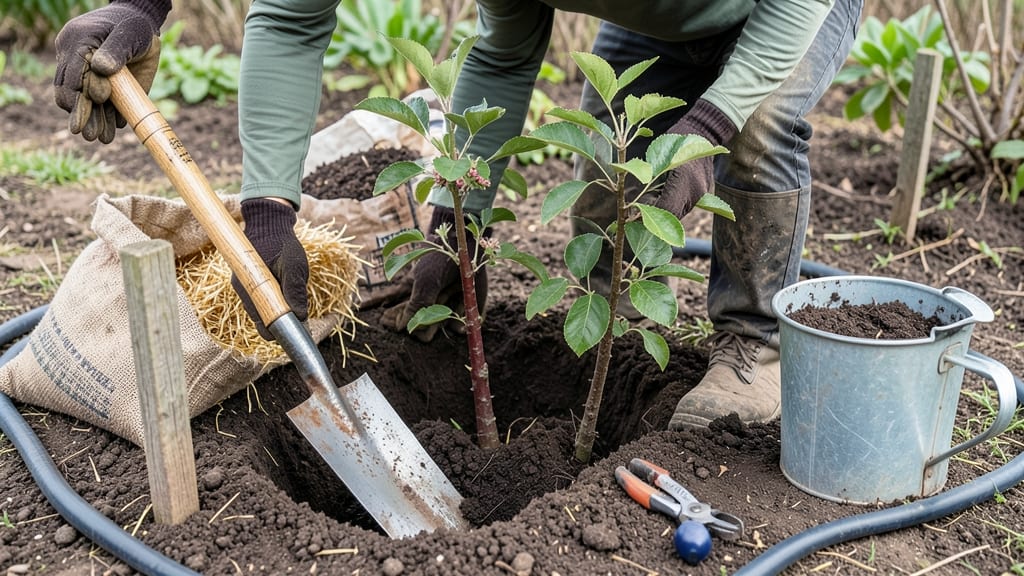
Timing your fruit trees planting in Colorado isn't just about the calendar—it's about matching your 🍎 varieties to the 4-7 USDA zones and avoiding the cruel April frost that can wipe out months of effort.
Picture this: You plant your peach tree in late winter, only to watch it struggle through Colorado's unpredictable swings from 30°F nights to 70°F days.
The difference between a thriving orchard and a sad, stunted tree often comes down to planting 4-6 weeks before the last frost date—typically between February and April.
I'll show you exactly which fruit trees thrive in Colorado's climate, how chill-hours affect your apple harvest, and why some gardeners swear by late-winter planting while others wait until spring. Let's get your orchard off to the right start.
From selecting cold-hardy varieties like 'Honeycrisp' apples to preparing your soil for Colorado's alkaline conditions, we'll cover every critical step to ensure your fruit trees not only survive but flourish in the Centennial State's challenging growing season.
Colorado fruit tree planting calendar by chill-hours and microclimate Zones
Colorado’s diverse climate—from high-elevation chill to Front Range heat—means planting fruit trees at the wrong time can spell disaster. Most Colorado gardeners fall into two camps: those who plant too early and risk frost damage, and those who wait too long, missing the optimal root-establishment window.
The key? Matching your chill-hour requirements with your local microclimate.
For example, apples and pears need 500-1,000 chill hours, while peaches and nectarines thrive with 300-500 chill hours. In Denver (Zone 5), that means planting ‘Honeycrisp’ apples in early April, but ‘Redhaven’ peaches can wait until late April.
High-elevation areas like Fort Collins (Zone 4) need to plant 2-4 weeks earlier to avoid late spring frosts.
Here’s how to align your planting with Colorado’s USDA Zones 4-7 and chill-hour needs:
| Fruit Type | Chill-Hour Range | Best Planting Window | Zone 4 (High Elevation) | Zone 5 (Denver) | Zone 6-7 (Pueblo) |
|---|---|---|---|---|---|
| Apples | 500-1,000 | Late March - Early April | March 15-April 1 | March 30-April 15 | April 10-May 1 |
| Peaches/Nectarines | 300-500 | Late April - Early May | April 15-May 1 | April 30-May 15 | May 10-June 1 |
| Cherries (Sweet) | 600-900 | Late March - Early April | March 20-April 5 | March 25-April 10 | April 5-April 20 |
| Pears | 400-800 | Late March - Early April | March 20-April 1 | March 25-April 10 | April 5-April 20 |
| Plums | 200-600 | Late March - Early May | March 25-May 1 | April 5-May 15 | April 20-May 30 |
Notice how Zone 4 areas (like Steamboat Springs) have a 2-3 week earlier window than Zone 6-7 (like Pueblo). This accounts for earlier last frost dates at lower elevations. Use your local CoCoRaHS frost map to fine-tune timing—Colorado’s microclimates can vary by miles, not just zones.
Spring planting is ideal because it gives roots 6-8 weeks to establish before summer heat. However, if you must plant in fall, do so 6-8 weeks before your first frost (typically late August to mid-September in most of Colorado).
Fall-planted trees need extra winter protection, like deep mulch and tree wraps, to survive our freeze-thaw cycles.
Pro tip: Bare-root trees (sold dormant) can handle fall planting, but container-grown trees should only be planted in spring. The exception? If you’re in Zone 6-7 and planting low-chill varieties like ‘Reliance’ peaches, you can push fall planting to mid-October.
One mistake I see often is ignoring soil temperature. Even if air temps are warm, cold soil can stunt root growth. Wait until soil temps reach 45°F+ (use a soil thermometer) before planting.
In Denver, that’s usually mid-April, while Grand Junction can start 2 weeks earlier.
For high-elevation gardeners (above 7,000 ft), prioritize dwarf or semi-dwarf varieties on cold-hardy rootstocks like M.9 or
Best fruit tree varieties for Colorado’s short growing season and early freezes
Colorado’s short growing season and early frosts mean choosing the right fruit tree varieties is just as important as timing. I’ve selected top 5 cold-hardy varieties that thrive in USDA Zones 4-7, including ‘Honeycrisp’ apples and ‘Montmorency’ cherries, which handle Colorado’s chill hours like pros.
These varieties aren’t just tough—they’re early-bearing and disease-resistant, perfect for gardeners who want fruit without waiting years. For example, ‘Elberta’ peaches mature quickly and produce sweet, juicy fruit even in high-elevation areas like Fort Collins or Steamboat Springs.
Here’s how to match varieties to your microclimate and extend the season with rootstock choices and mulching:
- 🍎 ‘Honeycrisp’ Apples – Thrives in Zones 4-7, needs 400-600 chill hours. Sweet, crisp, and stores well.
- 🍒 ‘Montmorency’ Cherries – Cold-hardy to -30°F, 500+ chill hours. Tart but perfect for pies.
- 🍑 ‘Elberta’ Peaches – 300-500 chill hours, early ripening. Great for Front Range gardens.
- 🍐 ‘Harvest Queen’ Pears – 400+ chill hours, disease-resistant. Ripens in late August.
- 🍐 ‘Stanley’ Plums – 200-400 chill hours, early-bearing. Ideal for high-elevation areas.
To extend your growing season, pair these varieties with rootstocks suited to Colorado’s climate. For example, ‘M.26’ rootstock for apples tolerates dry conditions while still producing high-quality fruit. Mulching with straw or wood chips insulates roots and retains moisture, which is critical during Colorado’s dry summers.
For high-elevation areas (like Aspen or Leadville), opt for varieties with lower chill-hour requirements, such as ‘Stanley’ plums or ‘Brookgold’ apples. These trees bloom later, avoiding late spring frosts that can devastate early bloomers.
Don’t forget to prune in late winter to open the canopy for better airflow and sunlight. This reduces disease risk and ensures your trees fruit abundantly year after year. With the right varieties and care, you’ll enjoy homegrown fruit even in Colorado’s challenging climate! 🍏🌿