
Trees
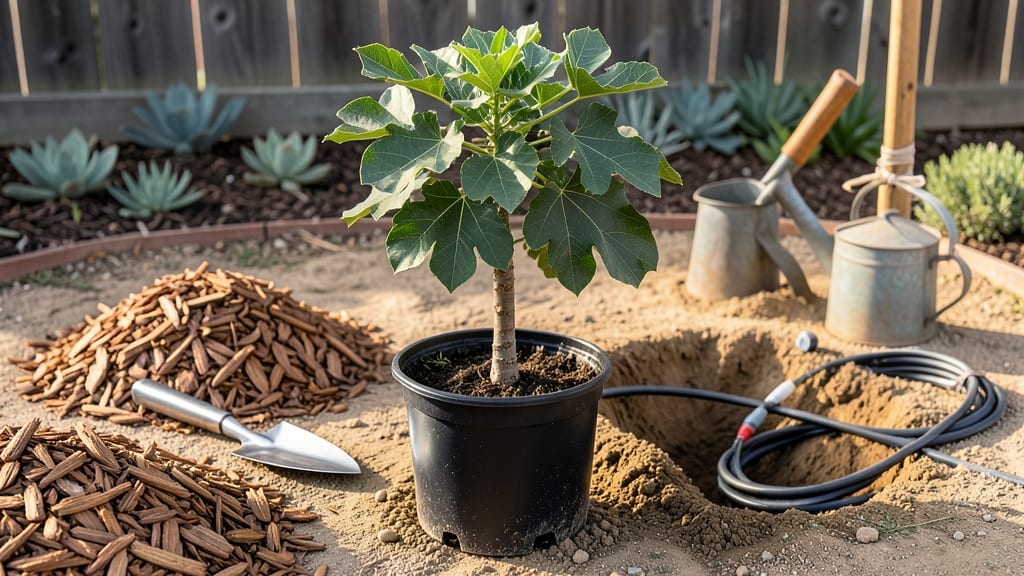
If you're dreaming of a backyard bursting with 🍎 fruit trees but live in Arizona's intense climate, timing your planting could make or break your harvest.
The key isn't just picking the right season—it's matching your fruit tree's chill-hour needs with Arizona's unique microclimates, where Phoenix's heat meets Flagstaff's cooler nights.
Most Arizona gardeners assume spring is the only planting window, but that couldn't be further from the truth. The best time to plant fruit trees in Arizona is actually during the cooler winter months—November through February—when soil temperatures are ideal and extreme summer heat hasn't arrived yet.
This gives young trees a fighting chance to establish strong roots before the real challenges begin.
Why does this matter? Because planting at the wrong time can leave your fruit tree struggling with heat stress, poor soil moisture, or even root rot from overwatering in the desert sun.
I'll show you exactly which months work best for your specific fruit tree variety, how to prep your soil for Arizona's alkaline conditions, and the critical care steps to ensure your tree thrives year after year.
Whether you're planting a low-chill peach tree in the Valley or a hardier apple variety in the high desert, getting the timing right is the first step to a bountiful harvest. Let's dive into the science—and the secrets—of planting fruit trees that actually survive (and produce!) in Arizona's climate.
Arizona fruit tree planting calendar by chill-hour needs
Arizona’s unique climate demands precise timing for fruit tree planting, where chill-hour requirements dictate success. Unlike northern climates, Arizona’s Low Desert (Phoenix, Tucson) rarely drops below 40°F, while High Desert (Flagstaff, Prescott) sees occasional frost.
This means low-chill varieties (300-500 hrs) thrive in the Low Desert, while medium-chill (500-700 hrs) options work in cooler elevations.
Planting too early risks heat stress or root rot, while waiting too long may expose young trees to winter dieback. The ideal window spans November through February, when soil temps hover between 60-70°F and rainfall is moderate.
For High Desert areas, extend planting into early March to avoid late frosts.
Soil preparation is non-negotiable: Arizona’s alkaline soils (pH 7.5-8.5) need amendment with compost or sulfur to lower pH for acid-loving trees like peaches. Well-draining soil prevents root suffocation, and mulching with wood chips retains moisture during the 110°F+ summers.
🌱
For Low Desert gardeners, prioritize figs, pomegranates, and desert-adapted citrus, which require minimal chill hours. These varieties tolerate 110°F+ temps and thrive with occasional deep watering.
In contrast, High Desert areas can support plums, apricots, and Japanese plums with 500-600 chill hours, planted in late winter to avoid spring frosts.
Monitor soil moisture closely: Arizona’s caliche layer (hardpan) can restrict root growth. Amend planting holes with compost and sand to improve drainage. Windbreaks are essential in open areas—use bamboo fencing or shrubs to protect young trees from desert winds that dry out soil.
After planting, prune dead branches and apply a 2-inch layer of mulch to retain moisture. Avoid fertilizing for the first 6–8 weeks to prevent root burn. Instead, focus on consistent watering until the tree establishes a strong root system by spring.
🪴
In Phoenix and Tucson, November is peak planting time—cooler temps and higher humidity reduce transplant shock. For Flagstaff and Prescott, wait until late February or March to align with soil warming and frost-free periods. Use a soil thermometer to confirm temps are above 60°F before planting.
Pro tip: Container-grown trees establish faster than bare-root varieties. Choose 1–2 gallon containers for dwarf or semi-dwarf varieties to simplify planting and reduce water needs. Drip irrigation is a game-changer—set up a slow-release system to deliver water directly to roots.
💧
Best low-chill fruit trees for Arizona heat (proven varieties)
Arizona’s low-chill climate (typically 300-500 chill hours) eliminates most traditional fruit trees, but don’t worry—plenty of heat-loving varieties thrive here. These 5 top performers deliver sweet fruit while surviving our 110°F+ summers and alkaline soils. Let’s dive into the best drought-resistant picks and their ideal planting windows.
For Phoenix and Tucson gardeners, focus on figs, pomegranates, and citrus—these handle full sun exposure and minimal winter chill. In Flagstaff or Prescott, where 500-700 chill hours occur, peaches and plums become viable options.
Always match your tree’s chill needs to your local microclimate to avoid blooms that drop.
🌱 Pro Tip: Purchase local nursery-grown trees (not mail-order) to ensure they’re already heat-acclimated. Avoid bare-root trees in summer—they’ll stress quickly in Arizona’s dry air.
If you’re in the Low Desert (Phoenix/Tucson), figs and pomegranates are your safest bets—they bear fruit reliably with minimal care. For High Desert areas (Flagstaff), peaches and plums reward you with juicy summer fruit if planted in late fall to avoid spring frost.
Always water deeply after planting and mulch heavily to retain moisture.
💧 Watering Hack: Newly planted trees need 15-30 gallons of water every 7-10 days for the first year. Use drip irrigation to avoid wetting leaves (reduces fungal risk). After establishment, most low-chill trees thrive on rainfall alone.
For maximum fruit production, prune in late winter to remove dead wood and open the canopy for airflow. Avoid heavy pruning in summer—it stresses trees during peak heat. With the right variety and timing, you’ll enjoy homegrown fruit within 2-3 years—no orchard required!