
Trees
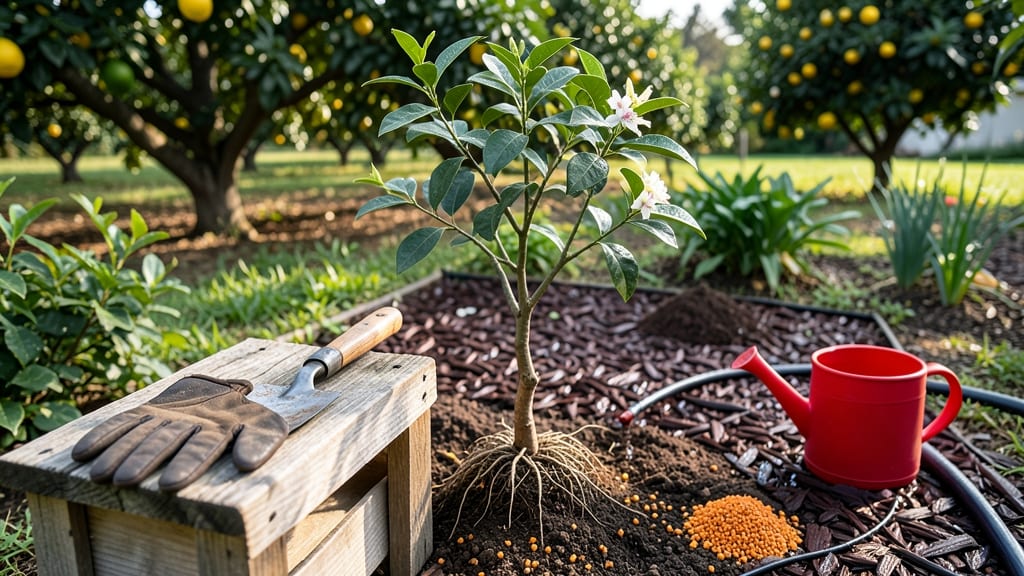
Planting your 🍊 citrus tree in Arizona at the wrong time could mean watching it struggle—or worse, die—under the desert sun or a rare frost.
The best time to plant isn’t just about avoiding summer’s brutal heat; it’s about giving your tree’s roots a fighting chance to establish before the real challenges hit.
Most Arizona gardeners swear by the November to March window, when soil temperatures stay warm enough to encourage root growth but frosts are rare. This winter planting strategy lets your citrus tree focus on settling in without battling extreme conditions.
But here’s the catch: not all Arizona zones are created equal.
Whether you’re in Phoenix’s low desert or Tucson’s higher elevations, timing matters more than you think. I’ll break down exactly how to read your soil’s temperature cues, pick the perfect variety for your microclimate, and avoid the 3 biggest mistakes that turn promising starts into sad statistics.
Let’s get your citrus tree off to the strongest start possible—because once you nail the planting window, you’re already ahead of 90% of Arizona growers who miss the mark every year.
Arizona’s ideal citrus planting windows: soil temperature triggers for success
Arizona’s desert climate and variable frost zones demand precise timing for citrus tree planting. Unlike coastal regions, Arizona’s soil warmth and microclimates (like Phoenix vs. Flagstaff) create distinct windows for success. The golden rule? Plant when soil temperatures stay above 60°F—this triggers root growth without heat stress.
Citrus trees hate cold snaps and intolerate summer’s 110°F+ heat. In Arizona, the optimal planting window spans from November to March, aligning with cooler temperatures and lower frost risk. This period lets roots establish before summer’s brutal heat arrives.
🌱
| Month | Soil Temp (°F) | Frost Risk | Best For |
|---|---|---|---|
| November | 65-75°F | Low (post-monsoon) | Bare-root transplants |
| December | 60-70°F | Very Low | Container planting |
| January | 55-65°F | Minimal (high-altitude risk) | Dwarf varieties |
| February | 60-70°F | None | Standard trees |
| March | 65-75°F | None | Late-season planting |
| April | 70-80°F | None | Risky (heat stress) |
Arizona’s microclimates create exceptions. In Phoenix and Tucson, frost is rare, so October and April can work—but only if you provide shade cloth during summer’s peak. For Flagstaff or Prescott (higher elevations), stick to November–February to avoid 20°F+ dips.
Test soil temperature with a soil thermometer before planting. Aim for 60°F+ at 6 inches deep. In container planting, warm soil faster by placing pots on black plastic mulch or using heat mats in early spring.
🌡️
Citrus trees planted in April or May face transplant shock from 100°F+ soil. Roots struggle to establish, leading to leaf drop or stunted growth. Even ‘Meyer’ lemons (the hardiest variety) need 6 weeks of recovery time before summer’s heat peaks.
For container-grown citrus, extend your planting window by 2 weeks. Pots warm up faster than ground soil, so you can plant container trees in late March—just move them to shaded areas during 110°F+ days. Use 5-gallon pots minimum for young trees.
🪴
Pro tip: Mulch heavily (4–6 inches of wood chips or straw) to regulate soil temperature. This keeps roots 5–10°F cooler in summer and warmer in winter, giving your citrus tree a stable growing environment year-round.
In low-desert areas (like Yuma or Tucson), November is ideal—soil stays warm, and monsoon rains have passed. In higher elevations (e.g., Sedona), wait until January to avoid freeze damage.
✂️
Arizona’s ideal citrus planting windows: soil temperature triggers for success
Arizona’s USDA Zone 9b climate offers a narrow window for planting citrus trees—November through March—when soil temperatures hover between 60°F and 75°F. This range mimics tropical conditions citrus trees crave, reducing transplant shock.
Outside these months, extreme heat or frost risk can stunt growth or kill young trees entirely. In Phoenix and Tucson, where summers exceed 100°F, planting in late fall or winter ensures roots establish before the heat peaks.
Soil warmth is your best indicator. Use a soil thermometer to confirm temperatures: citrus roots thrive when soil stays above 60°F for 24+ hours. In high-altitude areas like Flagstaff (Zone 7b), wait until April to avoid late frosts.
Test soil in the morning for accuracy—afternoon desert heat can skew readings. For container-grown trees, check root zone temperature instead of surface soil.
Microclimates play a huge role. In Phoenix and Tucson, where winters are mild, January and February are ideal—soil stays warm, and frost risk is minimal. But in Sedona or Prescott, wait until April to avoid 28°F frosts.
Urban areas like Scottsdale benefit from heat islands, where soil warms faster. Use mulch to regulate temperatures: 3-4 inches of wood chips keeps roots cool in summer and warm in winter. For container trees, move them to protected spots (e.g., against south-facing walls) during December-January if frost warnings arise.
Timing isn’t just about months—it’s about moon phases. Plant during the waxing moon (when roots grow upward) for faster establishment. Avoid full moons, when energy shifts to leaves. Pair this with root-pruned trees (roots trimmed 1-2 weeks before planting) to reduce shock.
Water deeply 3 days before transplanting to hydrate roots, then again immediately after planting. Use drip irrigation to deliver 15-20 gallons of water directly to the root zone, keeping soil moist but not soggy.
Protect young trees with windbreaks—Arizona’s dry winds can desiccate leaves. A burlap barrier or evergreen hedge on the west side shields trees from afternoon sun. In high-desert areas, group citrus with other drought-tolerant plants like olives or pomegranates to create a shared microclimate.
Monitor for aphids or spider mites, which thrive in dry heat. Spray leaves with neem oil preventatively if planting in April, when pests are most active.
Your citrus tree’s first year is critical. If planted in November-March, it’ll establish roots before summer’s 110°F+ heat. Mulch heavily to retain moisture, and avoid fertilizing until spring—citrus trees need 6-8 weeks to recover from transplanting before they can handle nutrients.
By June, your tree should show new growth, signaling successful root establishment. If planted in April, prioritize shade cloth during peak afternoon heat to prevent leaf scorch.
🌱