
Plants
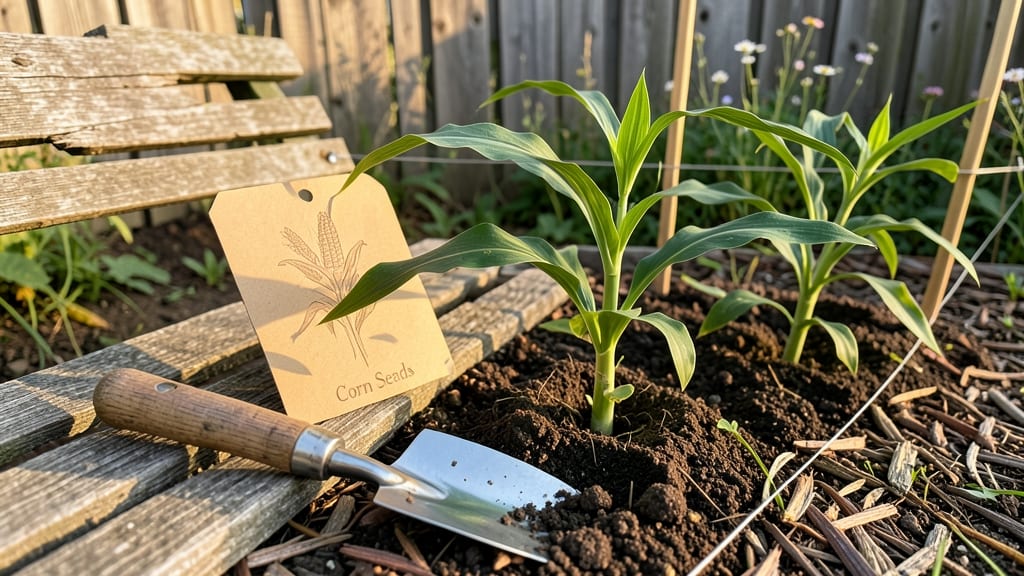
Timing your corn planting in Nebraska isn't just about following a calendar—it's about outsmarting frost traps that can turn your 🌽 dreams into a sad, blackened mess.
With USDA zones 5a-6b bringing wildly different frost risks from the Panhandle to Omaha, planting too early or late means either stunted plants or wasted seeds.
The perfect window—late April to mid-May—balances soil warmth (aim for 60°F) with frost-free confidence, but Nebraska’s microclimates demand flexibility. What works in eastern Nebraska’s humid valleys might fail in western plains where dry winds sneak in earlier.
I’ll show you how to read your local frost patterns and adjust planting dates like a pro.
Why does this matter? Because a 3-week delay can mean the difference between a bumper crop and a sad, stunted disappointment. We’ll cover soil prep tricks, seed spacing secrets, and even how to spot frost-prone spots in your yard before you drop a single kernel.
Ready to turn your Nebraska garden into a cornfield goldmine? Let’s dive into the exact strategies that’ll have your 🌽 reaching for the sky—no frost-related heartbreak included.
Nebraska corn planting zones by microclimate: frost risk maps & safe dates
Nebraska’s diverse geography—from the Panhandle’s arid plains to the Eastern Plains’ humid climate—creates wildly different corn planting windows.
The last average frost date shifts from April 15 in western zones to May 1 in eastern regions, meaning your Omaha garden has 2 weeks longer to plant than Scottsbluff.
Timing isn’t just about dates; it’s about soil temperature thresholds of 60°F+ and avoiding late-spring frost traps in river valleys.
Use the USDA Plant Hardiness Map alongside local frost risk data to pinpoint your zone. For example, Lincoln (Zone 5b) can start seeds indoors by March 15, while Chadron (Zone 5a) must wait until April 20 for outdoor planting.
Even a 2-week delay can mean the difference between a 100-bushel yield and a failed crop.
Here’s how Nebraska’s three major corn-growing regions differ in planting windows, frost risks, and soil readiness:
| Region | Avg. Last Frost | Safe Planting Window | Soil Temp Threshold | Key Risks |
|---|---|---|---|---|
| Panhandle (Scottsbluff, Alliance) | April 15–April 25 | April 20–May 5 | 60°F+ (soil) | Late frosts, drought stress |
| Central Plains (Lincoln, Kearney) | April 25–May 5 | May 1–May 15 | 60°F+ (soil) | Fungal diseases (humidity) |
| Eastern Nebraska (Omaha, Nebraska City) | May 1–May 10 | May 10–May 25 | 55°F+ (soil) | River valley cold pockets |
Pro tip: Check local almanac records for the past 5 years—Nebraska’s frost dates have shifted 3–5 days earlier per decade due to climate change. For example, Omaha’s last frost now averages April 28 instead of May 5, as recorded in the 1980s.
Adjust your planting date 2 weeks earlier if your area follows this trend.
Soil temperature is more critical than air temperature. Use a soil thermometer to confirm 60°F+ at 4-inch depth before planting. Cold soil delays germination and invites seed rot. In western Nebraska, where soils warm faster, you can plant 1 week earlier than eastern zones—even if frost dates align.
Microclimates matter too. Urban Omaha gardens near the Missouri River can experience 3°F colder nights than suburban areas, delaying planting by 5–7 days. Conversely, south-facing slopes in Lincoln warm 2–3 days faster than flat fields. Scout your site in March to identify these heat islands or frost traps.
For succession planting, Nebraska gardeners can squeeze in 2–3 corn crops by starting the first batch in late April and the last in early June. Choose early-maturing varieties (e.g., ‘Early Sunglow’ at 65 days) for these later plantings to avoid fall frost before harvest.
Just ensure your last planting reaches tasseling by August 15 to guarantee kernel fill.
If you’re in Zone 5a (Panhandle), prioritize drought-tolerant hybrids like ‘Pioneer P1190AMX’, which matures in 90 days. In Zone 6b (southeastern Nebraska), ‘DeKalb DKC63-20’ thrives with its 110-day maturity and high ear yield.
Always match your corn variety to your frost-free window—a 120-day variety planted in late May won’t mature before first frost in most of the state.
Remember: Nebraska’s corn planting window is just 4–6 weeks. Miss it, and you’ll face stunted plants, poor pollination, or ear rot. Use frost-free date calculators (like the Old Farmer’s Almanac tool) and local Cooperative Extension offices for real-time updates.
Your golden harvest starts with the right timing—not just the right seeds.
How to adjust corn planting dates for Nebraska’s unpredictable weather patterns
Nebraska’s weather can shift faster than a prairie wind, leaving gardeners scrambling to adjust planting timelines. Late frosts in April or early heatwaves in May can derail your corn crop if you’re not prepared. The key is flexibility—using tools like frost-free date calculators and soil thermometers to fine-tune your schedule.
Start by tracking soil temperatures with a reliable thermometer. Corn seeds need consistent 60°F soil temps to germinate. If your area experiences a late frost after your initial planting, don’t panic—just use row covers or hardening techniques to protect young seedlings until danger passes.
- 1. Use frost-free date calculators (like Almanac’s Frost Calculator) to set flexible planting windows.
- 2. Plant in stages—start with early-maturing varieties (60-70 days) to extend your harvest window.
- 3. Harden seedlings for 3-5 days before transplanting to toughen them against late frosts.
- 4. Monitor soil temps daily—corn won’t germinate below 50°F and stalls at 60°F.
- 5. Adjust irrigation—drought stress in early summer can delay tasseling by 7-10 days.
For gardeners in western Nebraska, where dry, hot conditions arrive early, prioritize drought-tolerant varieties like ‘Silver Queen’ or ‘Peaches & Cream.’ These can handle irregular rainfall better than standard hybrids. In eastern Nebraska, where humidity lingers, focus on disease-resistant seeds and wide row spacing to improve airflow.
If your area experiences an unexpected early heatwave (like the 90°F+ spikes in May 2023), delay planting until soil temps stabilize. Corn planted in overheated soil (>75°F) may suffer from poor germination or weak stalks.
A simple trick? Water your planting rows 24 hours before sowing to cool the soil naturally.
Succession planting is your best friend in Nebraska’s variable climate. Instead of planting all your corn at once, stagger seeds every 2 weeks from late April to early June.
This ensures a continuous harvest and reduces the risk of losing your entire crop to a single late frost or early blight outbreak.
Finally, keep an eye on local weather forecasts and USDA Plant Hardiness Zone maps. Nebraska spans Zones 5a-6b, so planting dates vary by just 10-14 days from the Panhandle to Omaha.
Use these tools to personalize your schedule—because in Nebraska, one size doesn’t fit all when it comes to corn planting.