
Plants
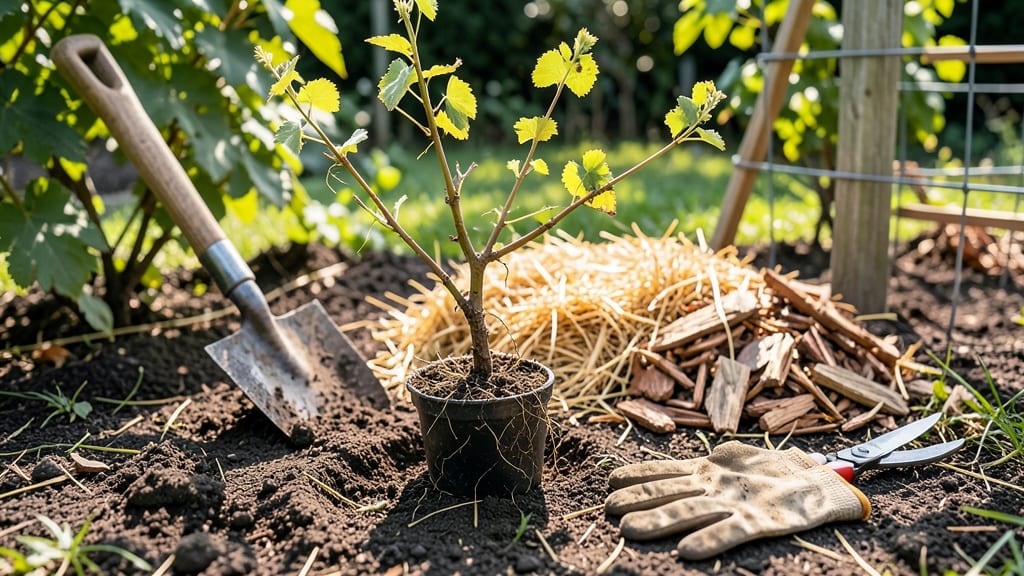
Timing your grapes 🍇 planting in Missouri isn’t just about the calendar—it’s about matching chill-hour needs to your local climate to guarantee those juicy harvests you dream of.
With the state’s 5b-6b zones swinging between early springs and crisp falls, one wrong move could leave your vines struggling or worse, frozen before they even take root.
Most gardeners in Missouri swear by early spring (March-April) planting, when soil warms above 50°F and frost risks fade—but fall (September-October) offers a second chance for varieties like Norton or Vidal Blanc to establish roots before winter.
The key? Understanding how many chill hours your grapevine needs to break dormancy, because planting too early or late can turn your $50 investment into a sad, leafy disappointment.
In this guide, I’ll break down the exact planting windows for Missouri’s chill-hour zones, plus pro tips to prep your soil, choose the right varieties, and avoid the 3 biggest mistakes that kill grapevines before they fruit.
Whether you’re a first-timer or a veteran gardener, these strategies will help you skip the guesswork and start harvesting homegrown grapes in as little as 2 years.
Ready to turn your backyard into a vineyard? Let’s get those dormant vines in the ground at the perfect moment—so you can enjoy sweet, sun-ripened grapes from August to October without the stress. Your future self (and your taste buds) will thank you.
Missouri grape planting timeline by chill-hour zones (2024 guide)
Missouri gardeners know timing is everything—especially when planting grapes that need 300–1,000 chill hours to fruit reliably. The Show-Me State spans USDA Zones 5b–7a, meaning your planting window depends on your region’s last frost date and chill-hour accumulation.
For example, St. Louis (Zone 6a) has 600–800 chill hours, while Kansas City (Zone 6b) sees 800–1,000 hours, and northern Missouri (Zone 5b) gets 500–700 hours.
Most Missouri gardeners plant dormant bare-root vines in early spring (March–April) or early fall (September–October), but the best choice hinges on your variety’s chill needs and local frost patterns. Concord grapes (400–600 chill hours) thrive in northern Missouri, while Norton (Cynthiana) grapes (800–1,000 chill hours) are perfect for southern regions. Vidal Blanc (500–700 chill hours) bridges the gap for most of the state.
Here’s how to align your planting with Missouri’s chill-hour zones and avoid frost damage or stunted growth. The key is planting when soil temps hit 50°F and at least 100 frost-free days remain. Use the table below to match your location, variety, and ideal planting window.
| Region (USDA Zone) | Chill Hours | Best Varieties | Spring Planting Window | Fall Planting Window |
|---|---|---|---|---|
| Northern MO (5b) | 500–700 | Concord, Niagara, Elvira | Mid-April to early May | Late September to mid-October |
| Central MO (6a) | 600–800 | Norton, Vidal Blanc, Catawba | Late March to April | Early September to early October |
| Southern MO (6b–7a) | 800–1,000+ | Norton, Chardonnay, Cabernet Franc | Early March to mid-April | Mid-September to late October |
Spring planting gives vines 6–8 weeks to establish roots before summer heat, while fall planting lets them root deeply before dormancy. For urban gardeners in cities like Kansas City or Springfield, opt for early spring to avoid late frosts.
In rural areas with milder microclimates (e.g., Hannibal or Cape Girardeau), fall planting often yields better survival rates.
Soil prep is non-negotiable. Missouri’s clay-heavy soils drain poorly, so amend with compost and sand to achieve well-draining, slightly acidic soil (pH 6.0–6.5). Test your soil 4–6 weeks before planting—Missouri Extension offices offer free or low-cost tests.
Add organic matter to the bottom of the planting hole and mix in a balanced fertilizer (10-10-10) to kickstart growth.
Pro tip: Mulch heavily (4–6 inches of straw or wood chips) to retain moisture and regulate soil temps. This is critical in Missouri’s hot summers and cold winters, where temperature swings can stress young vines. Avoid mulching too close to the trunk to prevent rot.
After planting, water deeply once a week (2–3 gallons per vine) for the first 2–3 months, then taper to every 10–14 days once established. Drip irrigation is ideal—it delivers water at the roots without wetting leaves, reducing fungal diseases like black rot, which thrives in Missouri’s humid summers.
Monitor your vines for bud break (early spring) and leaf fall (late fall). If you planted in fall, ensure vines enter dormancy with healthy root systems—this sets the stage for a bountiful harvest in 2–3 years.
For spring plantings, protect young shoots with frost cloth if late frosts threaten (common in northern Missouri until mid-April).
Missouri’s grape-growing success hinges on one rule: Match your variety to your chill hours. Skip the 1,000+ chill-hour varieties (like Pinot Noir) in northern Missouri—they’ll produce sparse, poor-quality fruit. Instead, stick to local favorites like Norton or Concord, which deliver reliable yields
How to match grape varieties to Missouri’s microclimates for maximum yield
Missouri’s diverse microclimates mean your grapevines’ success hinges on selecting the right chill-hour variety for your specific zone. For example, Norton grapes (Missouri’s state grape) thrive in 600–800 chill hours, while Vidal Blanc prefers 400–600 hours.
Urban areas like St. Louis often experience fewer chill hours than rural zones, so adjust your planting dates accordingly.
Start by checking your USDA Zone (5b–7a in Missouri) and cross-reference it with your grape variety’s chill-hour needs. For instance, Concord grapes (500–700 hours) are ideal for Zone 6, while Catawba grapes (800+ hours) suit Zone 5.
Use Missouri’s last frost dates (April 15 in most areas) as your planting deadline for spring.
Urban gardeners face unique challenges like heat islands and limited space, so opt for dwarf varieties like ‘Black Monukka’ (500–600 hours) or ‘Valvin Muscat’ (400–500 hours). These adapt well to containers and small trellises, making them perfect for patios or balconies.
| Variety | Chill Hours | Best Missouri Zone | Planting Window |
|---|---|---|---|
| Norton | 600–800 | 5b–6b | March–April or Sept–Oct |
| Concord | 500–700 | 6a–7a | March–April |
| Vidal Blanc | 400–600 | 6b–7a | April–May |
| Catawba | 800+ | 5b–6a | March–April |
To mitigate frost risks, plant early spring varieties like ‘Black Spanish’ (500–600 hours) in sheltered microclimates, such as south-facing slopes or near buildings. These spots warm up faster and protect young vines from late frosts.
For fall planting, choose September to allow roots to establish before winter while avoiding early frost.
Adjust your planting dates based on your grape’s dormancy period. For example, Vidal Blanc (400–600 hours) can handle later spring planting (April–May) in Zone 6b), while Catawba grapes (800+ hours) need earlier planting (March) in Zone 5b). Always verify your local frost-free days (aim for 100+ days after planting).
For urban gardeners, consider heat-tolerant varieties like ‘Red Globe’ (600–800 hours) or ‘Thomcord’ (500–600 hours), which perform well in hot microclimates. Pair these with drip irrigation and shade cloth during summer heatwaves to prevent stress. Test your soil’s pH (6.0–6.5) and drainage before planting—grapes hate soggy roots!