
Plants
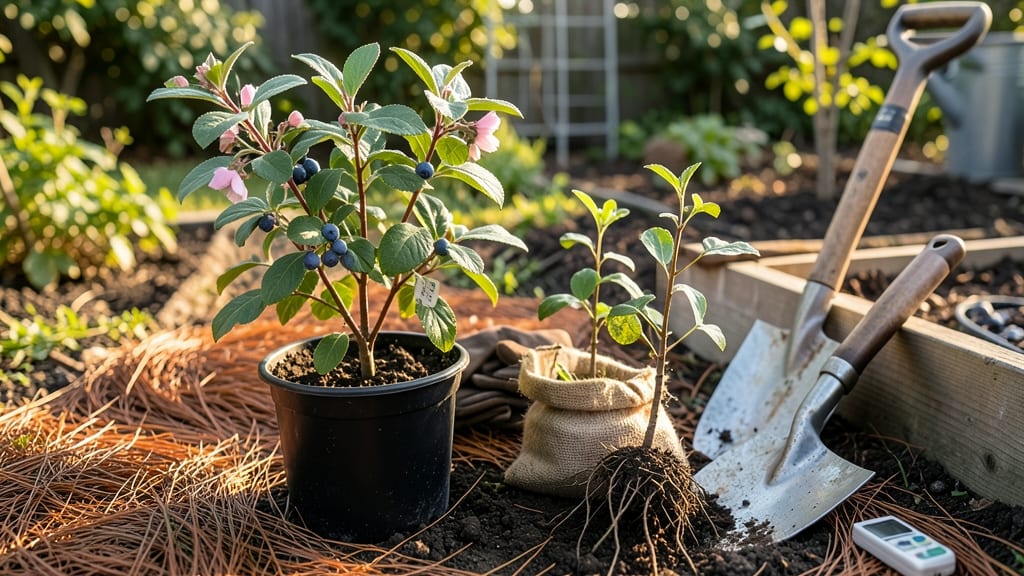
Timing your blueberry planting in Seattle isn’t just about the calendar—it’s about matching your 🫐 bushes to the city’s chill-hour quirks. Skip the wrong window, and you might end up with half-hearted shrubs or berries that never quite ripen.
The secret? Planting when Seattle’s late frosts have passed but before summer’s heat sets in.
Seattle’s Zone 8a climate throws a curveball with its damp winters and unpredictable springs. While most gardeners reach for their trowels in spring, the best window for blueberries actually starts in late winter—think February to April.
This gives roots time to establish before summer’s heat arrives, but you’ll need to shield young plants from those sneaky March frosts.
Here’s the game-changer: chill-hour matching. Not all blueberries thrive equally in Seattle’s mild winters. Southern Highbush varieties need fewer chill hours, while Northern Highbush types crave more.
We’ll break down which types work best for your specific neighborhood—whether you’re on the Eastside’s drier slopes or the Westside’s rainier side.
Ready to grow bigger, juicier berries? Let’s dive into the exact steps to prep your soil, pick the right varieties, and protect your plants from Seattle’s wet-season pitfalls. Your future breakfast smoothies will thank you.
Seattle’s best planting windows for blueberries: chill-hours explained
Seattle’s USDA Zone 8a climate creates unique challenges for blueberry growers. Unlike warmer regions, our cool, wet winters and mild summers require precise timing to ensure your bushes get the chill-hours they need to produce fruit. Most blueberries need 500-1,000 chill-hours (temperatures between 32°F-45°F) to set buds properly.
For Seattle gardeners, this means planting at the right time—either late winter (February-March) or early fall (September-October)bountiful harvest and a disappointing yield. The Eastside (like Bellevue) often gets 100-200 more chill-hours than the Westside (like Ballard), so variety selection matters.
Chill-hour requirements vary by blueberry type:
- Northern Highbush (e.g., 'Bluecrop') need 700-1,000 chill-hours
- Southern Highbush (e.g., 'Duke') need 300-500 chill-hours
- Rabbiteye (less common in Seattle) need 200-400 chill-hours
🌱 Seattle Blueberry Planting Timeline
| Time of Year | Action | Chill-Hour Status |
|---|---|---|
| February | Plant bare-root or container-grown bushes | Chill-hours accumulating (ideal for Northern Highbush) |
| March | Finalize soil prep; protect from late frosts | Peak chill-hour accumulation (700-900 hrs) |
| April | New growth emerges; fertilize lightly | Chill-hours sufficient; focus on warmth |
| September | Alternative planting window for Southern Highbush | Early chill-hours begin (300+ hrs) |
| October | Mulch heavily; protect from early frosts | Chill-hours critical for bud formation |
Seattle’s Westside microclimate (cooler, wetter) often struggles with late spring frosts that can damage new growth. Planting in March gives your bushes a head start before the average last frost (March 15), while fall planting in September-October allows roots to establish before winter.
Urban gardeners in Zone 8a areas like Capitol Hill should prioritize Northern Highbush varieties like 'Bluecrop' or 'Jersey,' while Eastside gardeners (Zone 8b-9a) can experiment with Southern Highbush types like 'Duke' or 'Peach Sorbet' for earlier harvests. Always check your specific chill-hour totals using local weather data.
Pro tip: Use row covers if planting in February to protect from unpredictable cold snaps. For container gardening (popular in Seattle apartments), choose dwarf varieties like 'Top Hat' and plant in well-draining pots with acidic soil mixes.
Remember: Soil pH testing is non-negotiable—blueberries thrive only in acidic soil (pH 4.5-5.5). Seattle’s native soil is often too alkaline, so amend with peat moss or sulfur before planting. The University of Washington Extension offers free soil tests through local nurseries.
For urban gardeners with limited space, consider blueberry bushes in large containers (at least 18" deep) placed on patio heaters during late frosts. This gives you control over microclimate conditions and extends your growing season by 2-3 weeks compared to in-ground planting.
🌱
Seattle’s best planting windows for blueberries: chill-hours explained
Seattle’s USDA Zone 8a climate offers two ideal windows for planting blueberries: late winter to early spring (February–April) and early fall (September–October). The key? Matching your chosen variety to Seattle’s chill-hour requirements—typically 600–1,000 hours below 45°F for most cultivars.
Southern Highbush varieties (like 'Duke') thrive with fewer chill hours, while Northern Highbush (like 'Bluecrop') need more.
Timing matters because Seattle’s unpredictable spring frosts (average last frost: March 15) can damage young plants. Planting in fall lets roots establish before winter, while spring planting gives berries more time to mature before harvest. The Eastside (warmer microclimate) often has 2–3 weeks earlier planting windows than the Westside.
🌱 Seattle’s Planting Windows for Blueberries
| Window | Best Months | Chill-Hour Needs | Microclimate Notes |
|---|---|---|---|
| Spring | February–April | 600–1,000 hrs | Plant after last frost (March 15 avg); Eastside 2 weeks earlier. |
| Fall | September–October | 500–900 hrs | 6–8 weeks before first frost (Nov 15 avg); roots establish before winter. |
For urban Seattle gardens, container planting extends flexibility—just ensure pots have drainage holes and use acidic potting mix (pH 4.5–5.5). Dwarf varieties like 'Top Hat' (3–4 ft tall) are perfect for balconies, while standard bushes need 6–12 ft of space.
Always test your soil’s pH before planting; blueberries won’t thrive in alkaline soil.
Pro tip: Use row covers if planting in late spring to protect from late frosts. Seattle’s wet winters mean mulching with pine needles or wood chips (2–3 inches) helps retain moisture and acidify soil naturally. Avoid synthetic mulches—they can raise soil pH over time.
Local nurseries like Seattle Tilth or Ballard Nursery stock blueberry varieties pre-adapted to Seattle’s climate. Ask for chill-hour data when selecting plants—this ensures your bushes flower and fruit reliably. Remember: Southern Highbush varieties (e.g., 'O’Neal') are your best bet for West Seattle’s milder winters.
Once planted, water deeply 2–3 times per week (more in summer) and fertilize with acid-loving plant food in early spring. Avoid overwatering—Seattle’s cloudy skies mean soil stays damp longer than you’d expect. With the right timing and care, your blueberries will reward you with harvests from July to August!