
Plants
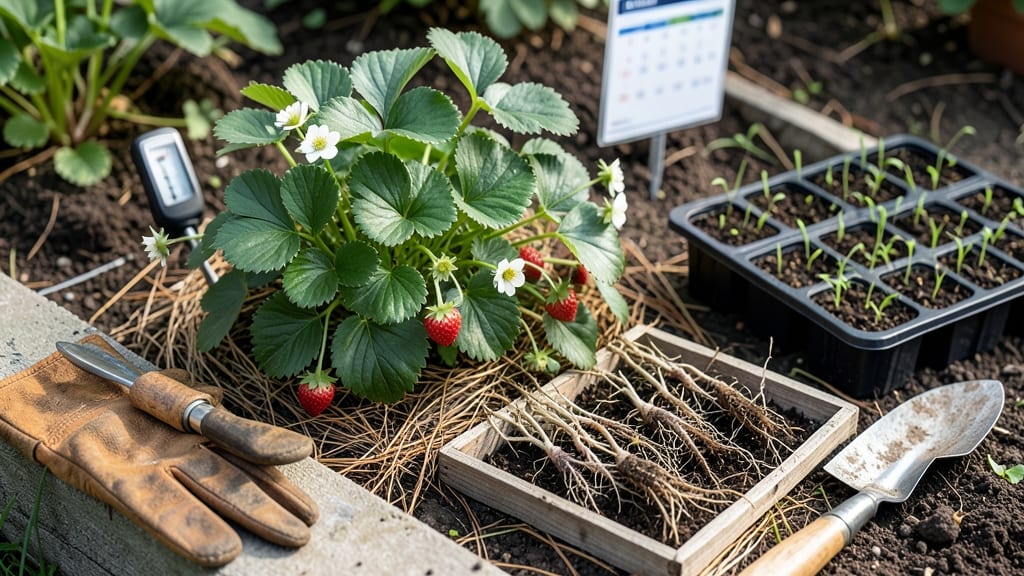
Timing your strawberry planting in Ohio isn't just about the calendar—it's about soil temperature, and getting it wrong can mean the difference between a bumper crop of 🍓 and a disappointing harvest.
Ohio's 6a climate zone brings unpredictable springs, where last-minute frosts can still threaten tender new plants. But here's the game-changer: strawberries thrive when soil reaches 40-45°F, not just when air temperatures rise.
I'll show you exactly when to plant for maximum success, whether you're working with bare-root plants or potted varieties.
You'll discover the ideal planting windows—both spring and fall—that align with Ohio's frost patterns, plus how to extend your growing season for a longer harvest. No more guessing games about when to get those plants in the ground.
Let's break down the science behind soil temperature triggers, the best varieties for Ohio's short season, and how to protect your investment from late frosts. Your path to a garden full of sweet, juicy strawberries starts here.
Ohio strawberry planting timeline by soil temperature zones
Ohio gardeners know that soil temperature matters more than air temperature when planting strawberries. The ideal soil temperature for strawberry roots to establish is between 40-45°F.
In Ohio’s USDA Zone 6a, this typically aligns with late March to early April for spring planting, but microclimates can shift that window by weeks.
Northern Ohio’s cooler springs may require waiting until mid-April, while Southern Ohio can start as early as late March. The key is testing your soil—not just checking the calendar. Use a soil thermometer to confirm readiness, as cold soil delays root growth and increases disease risk.
A common mistake is planting too early when the ground is still frozen or too late when weeds outcompete young strawberries. Bare-root plants need cooler soil (40°F), while potted strawberries can tolerate slightly warmer soil (45°F) because their roots are already established.
| Zone | Soil Temp Trigger | Ideal Planting Window | Microclimate Tip |
|---|---|---|---|
| Northern Ohio (Cleveland, Toledo) | 40-45°F (late March-early April) | April 1-15 | Wait for 3 consecutive days above 40°F |
| Central Ohio (Columbus, Dayton) | 40-45°F (late March) | March 25-April 10 | Use black plastic mulch to warm soil faster |
| Southern Ohio (Cincinnati, Athens) | 40-45°F (early March) | March 15-30 | Plant everbearing varieties for extended harvest |
| Fall Planting (All Regions) | 50-55°F (September-October) | September 1-30 | Aim for 6-8 weeks before first frost |
Testing soil temperature is simple: insert a soil thermometer 2-3 inches deep (where strawberry roots grow) and wait 10 minutes for an accurate reading. If your soil is below 40°F, delay planting or use row covers to protect young plants from cold snaps.
For bare-root strawberries, soak roots in water for 1-2 hours before planting to reduce transplant shock. Potted strawberries can go in slightly earlier since their roots are already hydrated. Both types benefit from mulching with straw after planting to retain moisture and regulate soil temperature.
Ohio’s last frost date averages around April 15, but late frosts can still occur. Planting 4-6 weeks before this date ensures your strawberries have time to establish roots before flowering. In practice, this means planting by mid-March in Southern Ohio and early April in Northern Ohio.
Fall planting is another Ohio-friendly strategy. Aim for September 1-30 when soil temps drop to 50-55°F. This gives roots time to establish before winter dormancy, resulting in earlier spring harvests. June-bearing varieties planted in fall often produce 20-30% more berries the following year.
If you’re unsure about your local microclimate, observe nearby gardens or ask local extension offices. For example, Cincinnati’s urban areas can be 5-7°F warmer than rural Appalachian regions just 30 miles away. Adjust your planting date accordingly to avoid root rot or flower freeze.
Remember: Soil temperature > air temperature for strawberry success. Use these triggers to time your planting perfectly and enjoy Ohio’s sweetest berries from late May to July.
How to adjust planting dates for Ohio’s frost risks and microclimates
Ohio’s late spring frosts can devastate early strawberry plants, but smart adjustments to your planting schedule protect your crop. The key is understanding microclimates—areas in your yard that warm faster than others, like south-facing slopes or raised beds.
For example, Northern Ohio (USDA Zone 5) may need to wait until mid-April, while Southern Ohio (Zone 6) can start as early as late March.
Choosing between bare-root plants and potted strawberries also affects timing. Bare-root varieties are cheaper but must be planted immediately upon arrival—waiting even a week can dry out their roots. Potted plants offer flexibility, letting you delay planting until soil temperatures reach 40-45°F, which reduces frost damage risk.
If you’re unsure, opt for everbearing varieties like 'Albion' or 'Seascape'; they produce fruit earlier than June-bearing types.
To extend your growing season, consider season extenders like low tunnels or cold frames. These can push your planting window back by 3-4 weeks in spring or add 2-3 weeks in fall.
For example, if you plant in early March under a low tunnel, you might harvest 1-2 weeks earlier than traditional spring plantings. Just If you’re planting in containers, you have even more control. Containers warm up faster than garden soil, so you can plant 1-2 weeks earlier in spring.
Use black plastic pots to absorb heat or place containers on brick or gravel to improve drainage and warmth. For container-grown strawberries, choose compact varieties like 'Tristar' or 'Ozark Beauty' to maximize yield in limited space.
Finally, monitor your local frost forecast using resources like the National Weather Service or Old Farmer’s Almanac. Sign up for text alerts if your area is prone to late frosts.
If a frost is predicted within 48 hours of planting, delay until conditions improve or protect plants with frost cloth. With these adjustments, you’ll avoid the heartbreak of lost crops and enjoy a bountiful harvest. 🍓
For first-time growers, start small with 5-10 plants to test your microclimate. Even experienced gardeners can learn from trial and error—what works in one yard might fail in another. Keep detailed notes on your planting dates, frost events, and yields to refine your approach each year. 🌱