
Plants
Timing your eggplant planting in North Carolina can make or break your harvest—get it wrong, and you might end up with wilted seedlings or missed opportunities for juicy 🍆 fruits. The key is knowing exactly when to plant after the last frost, which varies dramatically across the state's 7a-8b zones.
Most gardeners in North Carolina wait until April 15 through June 15 to plant eggplants, but that window shifts depending on whether you're in the cooler mountains or warmer coastal plains. For example, Asheville's Zone 7a gardeners should start later than those in Wilmington's Zone 8b.
In this guide, I'll break down the perfect planting timeline for your specific county, including when to start seeds indoors versus direct sowing. You'll also discover how to adjust for microclimates and heat tolerance to maximize your eggplant yield from July through October.
Whether you're a first-time gardener or a seasoned pro, these insights will help you avoid common mistakes and grow healthier, more productive eggplants. Let's get your plants in the ground at the right time for a bountiful harvest!
North Carolina eggplant planting timeline by heat Zone
North Carolina spans USDA Hardiness Zones 5b through 8b, creating dramatic differences in planting windows for eggplants. In Zone 5b (e.g., Asheville), you’ll need to wait until May 15–June 1 for safe transplanting, while Zone 8b (e.g., Wilmington) gardeners can start as early as March 20–April 15.
The key is aligning your planting with your county’s last frost date and soil temperature thresholds.
Eggplants thrive in soil temperatures above 70°F, so rushing them into cold ground is a recipe for failure. Use a soil thermometer to confirm readiness—most NC counties hit this mark between late April and early June, depending on elevation and microclimates.
For example, Raleigh (Zone 7b) typically reaches 70°F by April 25, while Charlotte (Zone 8a) hits it by April 10.
Here’s how to translate heat zones to actionable dates for your region:
| USDA Zone | County Examples | Last Frost Date | Ideal Transplant Window | Soil Temp Threshold |
|---|---|---|---|---|
| 5b | Asheville, Boone | April 20–May 5 | May 15–June 1 | 70°F+ (late May) |
| 6a | Greensboro, Winston-Salem | April 5–April 20 | April 25–May 10 | 70°F+ (early May) |
| 7a | Raleigh, Durham | March 25–April 10 | April 15–May 1 | 70°F+ (mid-April) |
| 7b | Fayetteville, Wilmington | March 15–March 30 | March 20–April 15 | 70°F+ (early April) |
| 8a | Charlotte, Greensboro | March 1–March 15 | March 10–April 10 | 70°F+ (late March) |
| 8b | Wilmington, Outer Banks | February 20–March 5 | February 28–April 5 | 70°F+ (late February) |
For direct sowing (skipping seedlings), add 2–3 weeks to these transplant windows since seedlings take time to establish. For instance, in Zone 7a (Raleigh), direct-sow eggplants between May 1–May 15 instead of April 15.
If you’re starting seeds indoors, begin them 8–10 weeks before your last frost date—so Zone 5b gardeners should start seeds by February 15, while Zone 8b gardeners can wait until January 1.
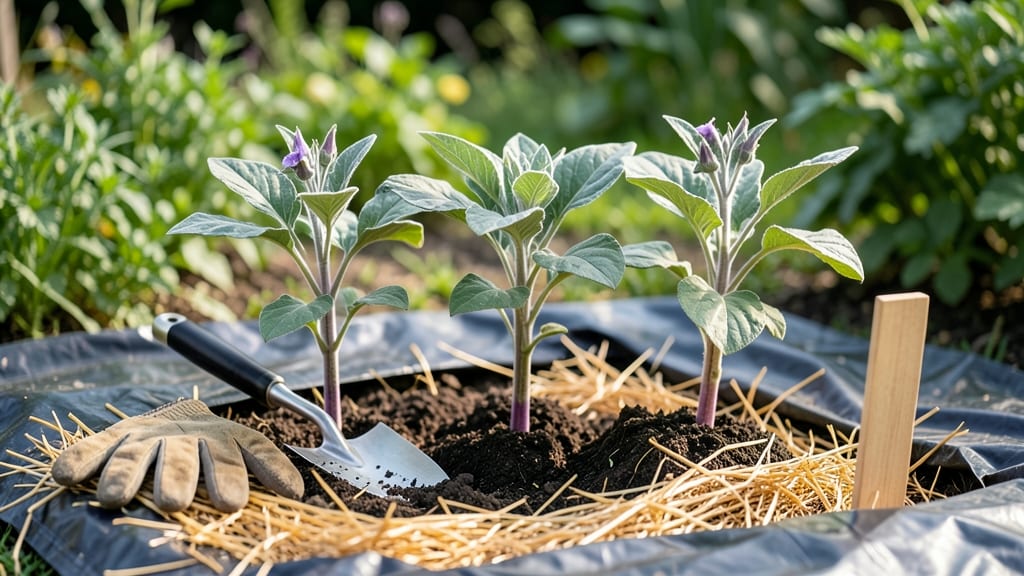
Pro tip: Use black plastic mulch to warm soil faster—this can shave 1–2 weeks off your planting timeline in cooler zones. In Zone 6a (Greensboro), mulch might let you transplant by May
How to adjust eggplant planting for NC’s microclimates
North Carolina’s diverse microclimates mean your eggplant’s success depends on where you live. In cooler Zone 5b areas like the mountains (Asheville, Boone), late frosts can linger until May 15, while coastal Zone 8b (Wilmington, Morehead City) enjoys frost-free soil by March 1.
Adjust your planting strategy to match your local conditions.
For high-elevation gardens (above 2,000 ft), use row covers or cold frames to extend the season. These protect seedlings from unpredictable spring frosts and let you plant 2-3 weeks earlier than the average frost date.
In coastal areas, focus on heat-tolerant varieties and mulch heavily to prevent soil moisture loss during summer’s intense sun.
Black plastic mulch is a game-changer for NC gardeners. It warms soil 5-10°F faster than bare earth, helping you plant earlier in spring and later in fall. Lay it down 2-3 weeks before transplanting to maximize soil temperature. Pair it with drip irrigation to keep roots consistently moist without wetting the leaves, reducing fungal risks.
⚠️ Common Mistakes to Avoid
- Planting too soon in Zone 5b without protection—seedlings won’t survive below 50°F soil temps.
- Skipping mulch in sandy soils (common in eastern NC) leads to rapid moisture loss and stunted growth.
- Overcrowding plants in hot, humid Zone 8b areas increases disease pressure (e.g., fungal leaf spot).
If you’re in a transition zone (6a-7a), like Raleigh or Greensboro, aim for mid-April transplanting after soil reaches 70°F. Use straw mulch to regulate temperature swings between day and night.
For container growing, choose dwarf varieties and move pots to sheltered spots if evening temps drop below 60°F.
Monitor your local NC State Climate Office for weekly frost forecasts. In Zone 7b and below, a late-May frost can still occur—have row covers ready to protect young plants.
In Zone 8b, you can push the season by planting successive crops every 2 weeks from March to early June for a continuous harvest.
Pro tip: Test your soil’s pH (6.0-6.8) and organic matter before planting. Amend with compost to improve water retention, especially in sandy soils (common in coastal NC). Well-amended soil helps eggplants withstand heat stress better and produces larger, healthier fruit.