
Plants
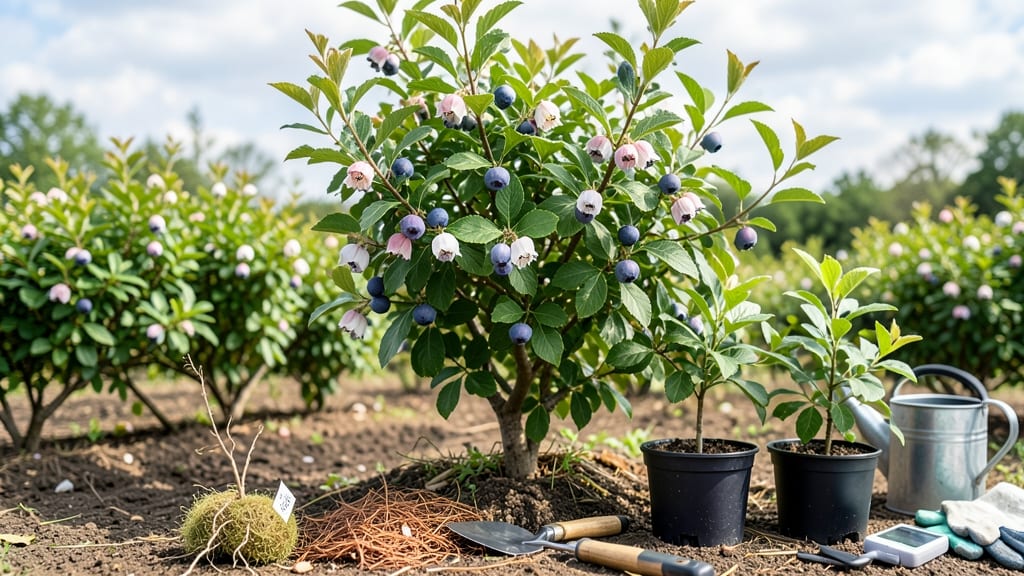
Timing your blueberry planting in Zone 8 isn't just about the calendar—it's about understanding your bushes' chill-hour needs and local frost patterns. Skip this step, and you might end up with weak plants or no berries at all.
The key is planting when soil temperatures rise but frost risks are still low, giving your 🫐 bushes the best shot at thriving.
Most gardeners in Zone 8 plant blueberries in late winter to early spring, ideally between February and March, when the ground is workable but the last frost isn’t lurking.
This window ensures your bushes get enough cold exposure (chill-hours) to flower properly while avoiding the stress of summer heat too soon.
But here’s the catch: coastal areas in Zone 8 might have milder winters, while inland spots could face harder freezes. That means your exact planting date depends on whether you’re near the ocean or tucked inland—both require slightly different approaches.
Whether you’re planting in the ground or containers, I’ll break down the exact steps to time it right, from soil prep to variety selection. Let’s get those blueberries growing strong!
Best planting time in Zone 8: chill-hours & frost-free guidelines
Blueberries thrive in Zone 8 when planted during their dormant season, which means late winter or early spring. The key is timing it 4-6 weeks before your last frost date—typically between February and March for most of Zone 8.
This window ensures roots establish before the growing season kicks in, giving your bushes a head start.
Zone 8 spans a wide range of microclimates, from coastal areas with milder winters to inland regions with colder snaps.
For example, coastal Zone 8 (like parts of California) may have frost as late as March 15, while inland areas (like Texas or Georgia) might see frost by February 20. Always check your local USDA Plant Hardiness Zone Map and average frost dates for precision.
Blueberries need 250-1,000 chill-hours (hours below 45°F) to produce fruit. Most southern-highbush varieties (like 'Southern Highbush' or 'Premier') thrive with 300-500 chill-hours, making them ideal for Zone 8. If you’re in a warmer microclimate with fewer chill-hours, choose low-chill varieties like 'Centurion' or 'O'Neal'.
Spring planting is ideal because it aligns with root growth before the heat of summer. However, you can also plant in early fall (September-October) if your soil stays workable and frost isn’t imminent.
Fall planting gives roots time to establish before winter dormancy, but avoid planting too late—6 weeks before first frost is the cutoff.
Soil temperature is another critical factor. Blueberries prefer soil temps between 40°F and 60°F when planting. If your soil is still cold (below 40°F), wait a few weeks. Use a soil thermometer to check—planting in warm soil can shock roots and stunt growth.
Container gardening changes the game for Zone 8 growers. Potted blueberries can be moved to protected areas during frost or heatwaves. Plant containers in early spring (March) and place them in a south-facing spot for maximum sunlight.
Use acidic potting mix (pH 4.5-5.5) and ensure pots have drainage holes to prevent root rot.
If you’re in a coastal Zone 8 area with mild winters, you might even extend your planting window into late winter. However, inland zones with colder snaps should stick to early spring planting. Always monitor your local weather forecasts and adjust your timeline accordingly—flexibility is key!
Once planted, mulch around your blueberries with pine needles or wood chips to retain moisture and acidify the soil naturally. This step is non-negotiable for Zone 8’s hot summers, as mulch helps regulate soil temperature and reduces water evaporation.
Remember: Rushing planting because you’re excited can backfire. Blueberries are perennial plants—they’ll reward you for years if you give them the right start. Take your time, prep the soil, and choose the right variety for your microclimate. Patience now means bountiful harvests later!
Best planting time in Zone 8: chill-hours & frost-free guidelines
Blueberries thrive in Zone 8, but timing is everything. Unlike many plants, blueberries need chill-hours—a specific number of hours below 45°F (7°C)—to produce fruit. Most Zone 8 varieties require 300-900 chill-hours, so planting too late or early can delay fruiting or even prevent it entirely.
In Zone 8, the last frost date typically falls between February 15 and March 15, depending on your exact location. Coastal areas may see earlier frost-free dates, while inland regions could experience frost as late as mid-April.
Always check your local USDA Plant Hardiness Zone Map for precise timing.
For bare-root blueberries, the ideal planting window is late winter to early spring—specifically February to March—about 4-6 weeks before your last frost. This gives roots time to establish before warm weather arrives.
Container-grown blueberries can also be planted in early fall (September-October), but they need time to root before winter.
| Planting Window | Chill-Hours Needed | Soil Temp for Planting | Best Time to Plant |
|---|---|---|---|
| Late Winter (Feb-Mar) | 300-900 hours | 40-50°F (4-10°C) | 4-6 weeks before last frost |
| Early Fall (Sep-Oct) | 300-600 hours | 50-60°F (10-15°C) | 6-8 weeks before first frost |
If you plant in fall, choose low-chill varieties (300-500 hours) like ‘Southland’ or ‘Climax’ to ensure they meet their chill requirements before winter dormancy. Avoid planting in summer or late spring, as the heat can stress young plants and stunt growth.
Pro tip: Test your soil’s chill-hours using a chill-hour calculator or local agricultural extension service. Some Zone 8 microclimates (like urban areas) may have fewer chill-hours due to heat islands, requiring varieties like ‘Premier’ (600 hours) or ‘Misty’ (500 hours).
Once planted, mulch heavily with pine straw or wood chips to protect roots from late frosts and retain moisture. Blueberries are frost-tolerant but hate soggy soil, so ensure well-draining, acidic soil (pH 4.5-5.5) before planting.
Adjust your timing based on your local frost dates—this is the key to year-round success! 🫐