
Trees
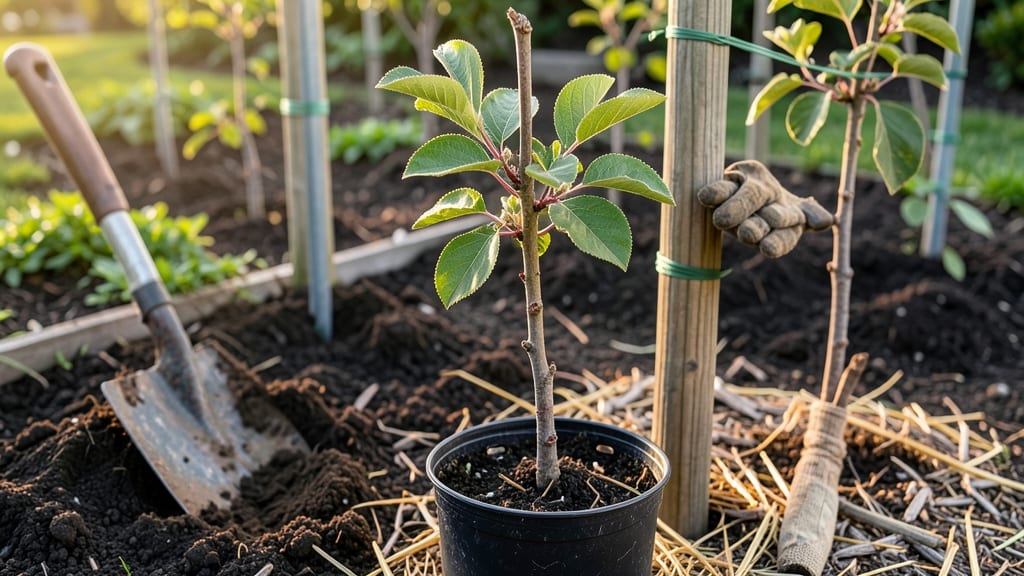
Planting an apple tree 🍎 in Illinois at the wrong time can mean the difference between a thriving orchard and years of disappointment—yet most gardeners still guess instead of using science-backed timing.
If you're dreaming of fresh-picked apples from your backyard, you'll want to know the exact window when soil temperatures and chill hours align perfectly for your Illinois zone 5-6 climate. The right timing isn't just about months—it's about understanding how your local microclimate interacts with your chosen apple variety.
I've researched the critical factors that separate successful orchards from failed plantings, including when to avoid late frosts and how to prepare your soil for maximum root growth. Let me show you the proven spring planting strategy that Illinois gardeners swear by.
From selecting cold-hardy varieties to mastering the 40°F soil temperature rule, you'll discover how to give your young tree the best possible start—before the first frost arrives in October. Ready to plant with confidence?
Illinois chill hours requirements: how cold nights determine apple tree success
If you've ever planted an apple tree in Illinois only to watch it bloom but never fruit, chill hours are likely the culprit. These cold winter nights—typically below 45°F (7°C)—are essential for apple trees to set fruit the following year.
In Illinois, where USDA Zones 5-6 dominate, most apple varieties need between 300 and 1,000 chill hours annually to thrive.
Northern Illinois (Zones 5a-5b) usually accumulates 600-900 chill hours, while southern Illinois (Zones 6a-6b) often sees 400-700 chill hours. Choosing the wrong variety can mean no apples—or worse, a tree that struggles to survive.
For example, Honeycrisp and Gala varieties thrive in northern Illinois, while Fuji and Golden Delicious adapt better to southern regions.
Here’s the catch: Even within Illinois, microclimates vary. A tree planted in a valley or low-lying area may accumulate more chill hours than one on a hilltop or urban heat island**. Always check local weather data or consult your county extension office for precise chill hour estimates in your area.
🌱
Matching your apple tree to your local chill hours isn’t just about avoiding poor fruit set—it’s about ensuring the tree’s overall health. For instance, a Honeycrisp in southern Illinois might bloom but fail to produce fruit because it didn’t get enough cold nights.
Meanwhile, a Golden Delicious in northern Illinois could struggle with bloom failure if exposed to too many warm winter nights.
Pro tip: If you’re unsure about your area’s chill hours, use a chill hour calculator like the one from the University of Illinois Extension. Simply input your ZIP code, and it’ll give you a precise estimate.
This small step can save you years of frustration—and hundreds of dollars on the wrong tree!
Another critical factor is late-winter warming trends. Illinois has seen more unpredictable temperature swings in recent years, which can disrupt chill hour accumulation. To mitigate this, plant low-chill varieties like Zestar! or Freedom if you’re in a warmer microclimate.
These varieties are bred to handle 300-500 chill hours, making them ideal for southern Illinois or urban heat islands.
Finally, remember that young trees (under 3 years old) are more sensitive to chill hour deficiencies. If you’re planting a new orchard, prioritize varieties that align with your region’s historical chill hour data.
For example, Northern Spy (700-900 chill hours) is a fantastic choice for northern Illinois, while Jonagold (500-700 chill hours) works well in central and southern regions.
🌳
Once you’ve matched your apple tree to your local chill hours, the next step is timing the planting for optimal root establishment. But before you dig, check your soil temperature—it should be consistently above 40°F (4°C) for at least a week. This ensures roots can grow without freezing, a common issue in early spring plantings. We’ll cover the best months to
Best planting months in Illinois: soil temperature & frost risk breakdown
Timing your apple tree planting in Illinois isn't just about picking a month—it's about reading the soil temperature and avoiding late spring frosts, which can devastate young trees.
In Illinois' USDA Zones 5-6, the ideal window spans from late February to early April, but your exact timing depends on whether you're planting bare-root or container-grown trees.
For bare-root trees, plant as soon as the ground is workable (around 40°F soil temperature), typically in March. Container-grown trees offer more flexibility, allowing planting until May, but early spring still gives roots the longest growing season before winter dormancy.
Soil temperature is your best guide—wait until it consistently stays above 40°F at a 4-inch depth. Use a soil thermometer to check, especially in northern Illinois, where colder microclimates delay warming. Southern Illinois may see workable soil as early as late February, while northern regions often wait until April.
While spring planting dominates, fall planting (late September to early October) is also viable in Illinois, especially for container-grown trees. The key is ensuring roots establish before the first frost (typically around October 15 in most regions). Fall-planted trees benefit from winter moisture and emerge stronger in spring.
Regardless of timing, always water deeply after planting to eliminate air pockets in the soil. Mulch with 3-4 inches of organic matter (like wood chips) to retain moisture and regulate soil temperature.
Avoid planting in waterlogged areas, as apple trees hate soggy roots—Illinois' clay soils often need amendments like compost to improve drainage.
Pro tip: Check your local cooperative extension service for frost date maps—Illinois' last spring frost can vary by 2-3 weeks across the state. Planting too early risks frost damage to new growth, while waiting too long may stunt root development before winter.