
Trees
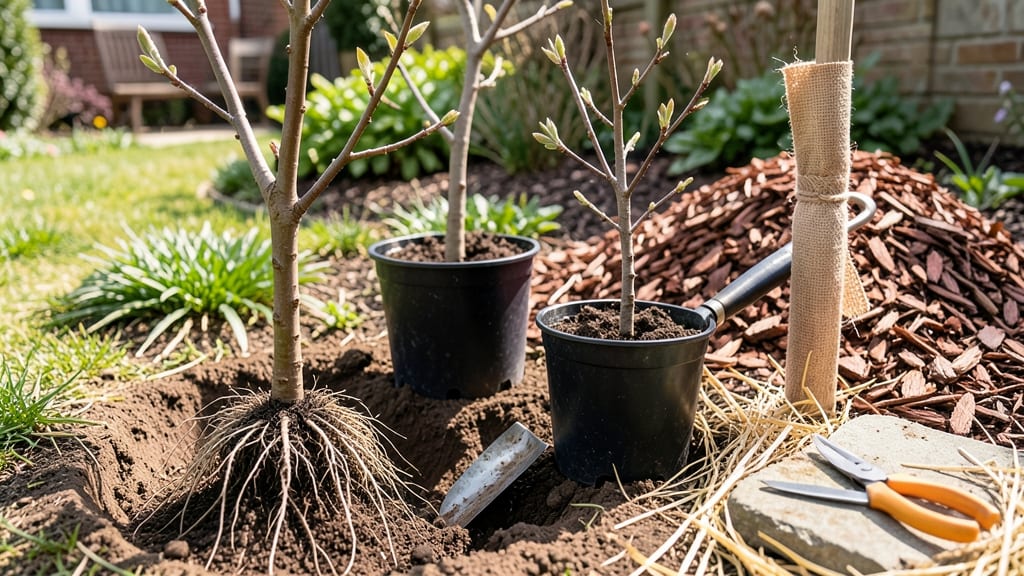
Planting apple trees in NJ at the wrong time can turn your dream orchard into a sad, wilted mess—but get the timing right, and you’ll be feasting on homegrown 🍎 by next summer.
New Jersey’s 6a-7b climate zones create a tricky balance: too early, and frost zaps your young roots; too late, and your tree struggles to establish before winter hits.
Most gardeners swear by early spring (March-April) as the golden window, when soil warms up but pests haven’t taken over yet. But here’s the catch: fall planting (September-October) works too—if you’re in a milder microclimate like coastal areas, where first frosts hit later.
The key? Matching your variety’s chill-hour needs to NJ’s unpredictable weather swings.
I’ve planted Honeycrisp and Fuji in both seasons, and the difference in root strength is night-and-day. In this guide, I’ll break down exactly when to dig in your zone, how to prep soil for NJ’s heavy clay, and which local nurseries stock the hardiest varieties.
No more guessing—just stronger trees and sweeter apples.
Ready to skip the trial-and-error? Let’s get your 🍎 off to the best start possible—because in NJ, timing isn’t just about the calendar. It’s about surviving the humid summers and freezing winters that’ll test your tree’s resilience from day one.
NJ’s best planting windows for apple trees by chill-hour zone
New Jersey’s climate spans USDA Zones 6a–7b, but the real secret to successful apple tree planting lies in chill hours—the number of hours below 45°F your tree needs to produce fruit. Most NJ varieties require 400–1,000+ chill hours, with coastal areas needing fewer hours than inland zones.
For example, Honeycrisp and Fuji thrive in inland NJ (600–1,000+ hours), while Gala or McIntosh adapt better to coastal areas (400–600 hours). Planting at the wrong time—like waiting until late spring—can stunt root growth and delay fruiting for years.
Here’s the golden window for planting in NJ, broken down by chill-hour zone and tree type:
Spring planting (March–April) is ideal for bare-root trees, while container-grown trees can handle fall planting (September–October) better. The key is to plant 4–6 weeks before your average first frost—check your local NJ State Climate Office for exact dates.
For coastal NJ, aim for March–April to avoid salt spray damage from winter storms. Inland areas can extend planting into early November, but avoid planting after the ground freezes. Always water deeply after planting to encourage root growth.
Pro tip: If you’re in a warmer microclimate (like a south-facing yard), opt for low-chill varieties like ‘Enterprise’ or ‘Akane’. These need fewer chill hours and fruit reliably in NJ’s Zone 7b pockets.
🌱
How to adjust planting timing for NJ’s microclimates (coastal vs. inland)
New Jersey’s diverse geography—from the coastal plains of Cape May to the inland highlands of Sussex County—creates microclimates that dramatically impact apple tree planting. Coastal areas experience milder winters and delayed last-frost dates, while inland regions face earlier freezes and harsher winters.
Understanding these differences ensures your tree thrives in its specific environment.
In coastal NJ (Zones 7a-7b), like Atlantic City or Cape May, the last frost typically occurs by April 1-15, giving you a 2-3 week longer window for spring planting compared to inland areas.
Meanwhile, inland NJ (Zones 6a-6b), such as Sussex or Morris counties, sees the first frost as early as October 15, cutting your fall planting window short.
Soil temperatures also vary: Coastal areas warm faster in spring, allowing earlier planting, while inland soils stay cooler longer.
For example, Honeycrisp apple trees (which need 800-900 chill hours) may struggle in coastal zones with fewer than 600 chill hours—opt for Fuji or Gala instead, which tolerate milder winters.
| Microclimate | Last Frost | First Frost | Best Planting Window | Soil Prep Tip |
|---|---|---|---|---|
| Coastal (e.g., Cape May) | April 1-15 | October 20-30 | March 20–April 30 | Amend sandy soil with compost to retain moisture. |
| Inland (e.g., Sussex County) | April 15-30 | October 1-15 | September 15–October 15 | Test soil pH (6.0–6.5) and add lime if acidic. |
For coastal plantings, focus on early spring (March–April) to avoid late-season heat stress. Inland areas benefit from fall planting (September–October), allowing roots to establish before winter dormancy. Both regions should avoid planting in extreme heat (above 85°F) or freezing temperatures (below 32°F).
Protect young trees in coastal zones from salt spray (common near beaches) by planting at least 100 feet inland or using windbreaks. Inland trees need deer protection—use tree guards or repellents during spring and fall when deer are most active.
Adjust your watering schedule based on microclimate: Coastal areas may need less frequent watering due to higher humidity, while inland trees require deep watering every 7–10 days to combat dry soil. Mulch heavily in both regions to retain moisture and regulate soil temperature.
Finally, monitor local frost dates via the NJ State Climatologist’s office or apps like Old Farmer’s Almanac. These tools help fine-tune your planting timeline for maximum success in your specific corner of NJ. 🌳