
Plants
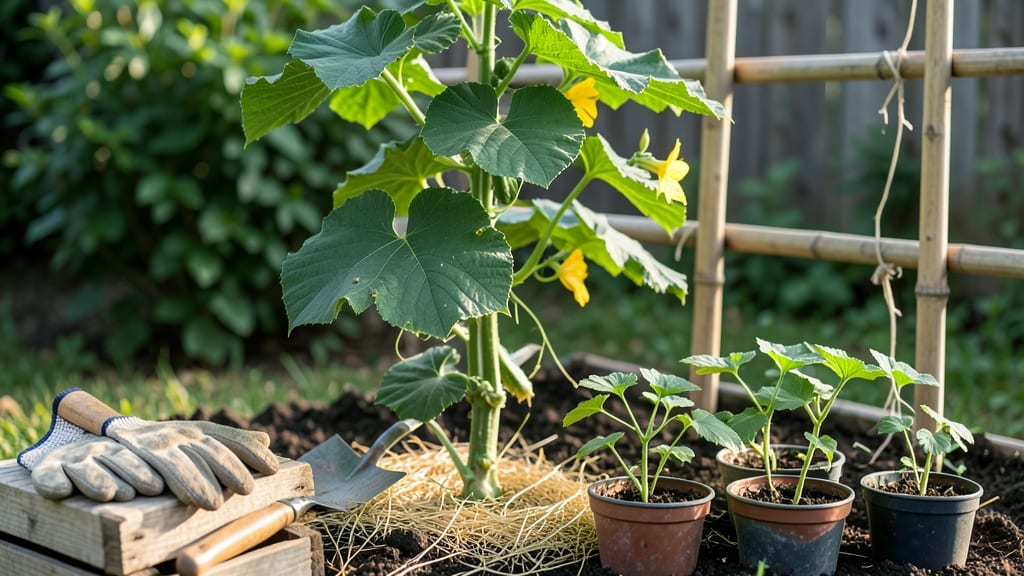
Planting cucumbers in Florida isn’t just about grabbing seeds and sticking them in the dirt—it’s all about soil warmth and timing to avoid bitter vines or wasted effort.
With year-round growing potential in zones 9a-11, you might think you can plant anytime, but cool soil in early spring or scorching summer heat can stall germination or stress your 🥒 plants.
Here’s the game-changer: Florida’s ideal planting windows hinge on soil temperatures hitting 60°F+, which triggers fast germination and robust growth. Whether you’re aiming for crisp spring harvests or fall bounty, knowing when to start—like February-March or August-September—makes all the difference.
I’ll walk you through the science-backed strategy to time your plantings perfectly, from using black plastic mulch to speed up soil warming to choosing heat-resistant varieties like ‘Straight Eight.’ Skip the guesswork and learn how to extend your growing season for faster, more abundant harvests.
Ready to turn your Florida garden into a cucumber powerhouse? Let’s dive into the exact months, soil tricks, and varieties that’ll give you the edge—no more waiting weeks for seeds to sprout or watching vines wilt in the heat.
Florida cucumber planting calendar: month-by-month soil warmth guidelines
Florida’s frost-free climate means you can grow cucumbers almost year-round—but soil temperature is the real game-changer. Cucumbers need warm soil (55°F+) to germinate and 70°F+ for vigorous growth. In Florida, this translates to two prime windows: early spring and late summer.
Let’s break it down by region, since North Florida (like Jacksonville) has cooler soils than South Florida (Miami).
For North Florida (USDA Zones 8a-9a), aim for February-March or August-September plantings. The Panhandle can even squeeze in a January start if you use soil warming tricks.
Meanwhile, Central Florida (Orlando, Tampa) enjoys January-April and August-October windows, while South Florida (Miami, Key West) can plant year-round with minimal adjustments. The key? Soil temperature, not just air temperature.
🌱 Why soil warmth matters: Cool soils (below 55°F) cause seeds to rot or sprout poorly. Use a soil thermometer ($10 at garden centers) to check 2 inches deep—this is your green light for planting. In Florida, this usually aligns with average daily highs of 70°F+, but heat waves can throw off timing.
Here’s your region-specific planting timeline, including soil temp triggers and harvest windows:
Pro tip: South Florida gardeners can even grow cucumbers in winter (December-January) if they choose heat-tolerant varieties like ‘Straight Eight’ or ‘Marketmore 76’. These varieties handle 80°F+ soil better than traditional types.
For North Florida, focus on spring (Feb-March) and fall (Aug-Sept) to avoid summer’s brutal heat, which can cause bitter fruit or poor germination.
If you’re in Central Florida, you’ve got the best of both worlds: two full harvests per year.
Plant bush varieties (like ‘Bush Champion’) in spring for compact growth, and vining types (like ‘Arkansas Little Leaf’) in fall for trellising. Trellising isn’t just for aesthetics—it improves airflow, reducing fungal diseases like powdery mildew, which thrives in Florida’s humidity.
For container growing (great for apartments or small spaces), use 5-gallon pots and plant in March-April or September-October. Containers heat up faster than soil, so water daily and fertilize every 2 weeks with a balanced 10-10-10 mix.
Place pots in full sun (6+ hours), but provide afternoon shade in June-July to prevent heat stress.
One common mistake in Florida is planting cucumbers too early in spring without warming the soil. If your soil is below 60°F, seeds may rot in the ground. To test, push a soil thermometer 2 inches deep on a shady morning.
If it’s below 55°F, wait or use black plastic mulch to raise temps by 5-10°F in 1-2 weeks.
For summer plantings, start seeds indoors 4-6 weeks before your target date (e.g., July for August planting) to avoid heat shock.
Harden off seedlings by placing them outside for 2-3 hours daily before transplanting. Morning transplanting (before 10 AM) reduces transplant shock in Florida’s intense afternoon sun.
🌱 Remember: Florida’s humidity and
Florida cucumber planting calendar: month-by-month soil warmth guidelines
Florida’s frost-free climate lets you grow cucumbers year-round, but soil temperature dictates the best planting windows. Cucumbers need 55°F+ soil to germinate and 70°F+ for vigorous growth. Here’s how to align planting with Florida’s regional microclimates—from North Florida’s cooler springs to South Florida’s year-round warmth.
In North Florida (Zones 8a-9a), like Jacksonville or Gainesville, aim for mid-February to early March for spring plantings. Wait until late April if nights stay chilly. For fall, August is ideal—soil warms quickly after summer rains.
In Central Florida (Zones 9a-9b), like Orlando, you can start as early as January with soil warming tricks, but February-March is safest. Summer plantings thrive in August-September.
South Florida (Zones 10a-11) offers year-round planting, but January-February and August-September yield the best results. Avoid peak summer heat (June-July), when vines struggle to set fruit. Use shade cloth (30-50%) if planting in May-June to prevent bolting.
For extended harvests, stagger plantings every 2-3 weeks in spring and fall. In South Florida, January and August plantings often yield two harvests: one in March-April and another in October-November.
Always test soil temperature with a soil thermometer—cucumbers won’t germinate below 55°F, even in warm air.
Pro tip: Direct-sow seeds in spring for faster germination, but transplant seedlings in summer to avoid heat stress. Choose heat-tolerant varieties like ‘Straight Eight’ or ‘Marketmore 76’ for summer plantings—they handle 90°F+ temperatures better than standard types.
Remember: Florida’s humidity speeds up fungal diseases, so space plants 2-3 feet apart and use drip irrigation to keep foliage dry. Mulch with straw or grass clippings to retain moisture and regulate soil temp.