
Plants
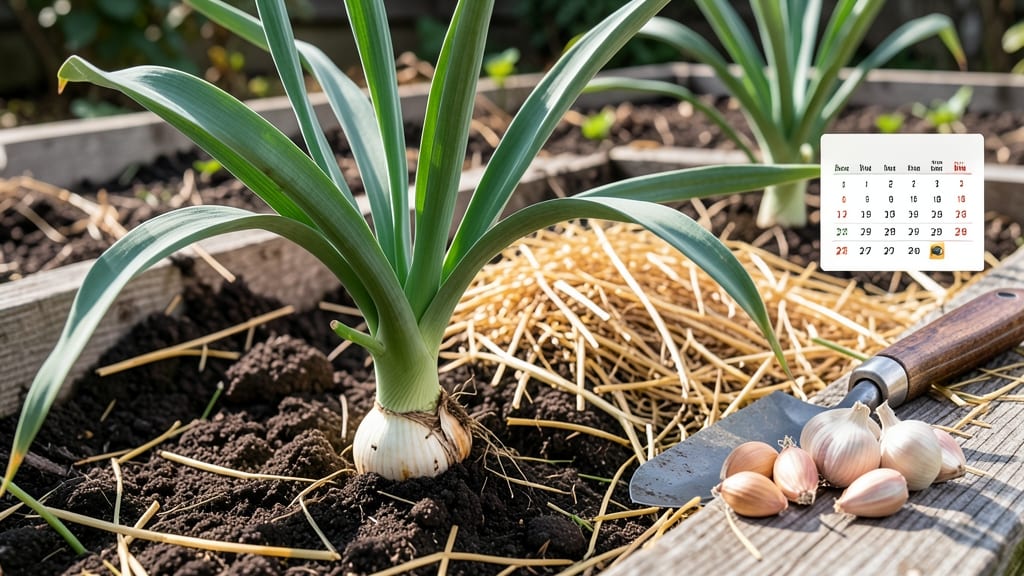
Timing your 🧄 garlic planting in Virginia can make or break your harvest—plant too early, and you risk rot; too late, and winter’s chill stunts growth. The secret lies in that narrow October-November window, when soil cools but frost hasn’t yet locked the ground.
For Virginia’s 7a-8a zones, this means aiming for 4-6 weeks before the first hard freeze, typically mid-November.
Why does this matter? Unlike spring-planted garlic, which struggles to mature before Virginia’s heat sets in, fall-planted cloves establish roots before winter’s dormancy. This gives them a head start for next summer’s bold, flavorful bulbs.
But here’s the catch: coastal areas like Norfolk may need to plant slightly later than inland zones like Charlottesville, where colder snaps arrive sooner.
I’ll walk you through the exact dates, soil prep tricks, and mulching hacks to ensure your garlic survives winter—and thrives. No more guessing whether your cloves will bolt or rot. Let’s get those 🧄 bulbs growing the right way.
From choosing hardneck varieties that braid beautifully to softnecks that store like a dream, we’ll cover everything. Plus, I’ll share my go-to method for protecting garlic from Virginia’s unpredictable frost cycles. Ready to plant with confidence?
Optimal Virginia garlic planting dates by hardiness Zone (7a-7b)
Virginia’s USDA Zones 7a-7b create a 6-week window for planting garlic—miss it, and you risk weak bulbs or winter kill. The ideal window is mid-October to early November, when soil temps drop to 50-60°F but before hard frost hits.
This timing lets garlic establish roots before winter dormancy, ensuring frost survival and larger bulbs. Coastal areas (like Norfolk) may plant slightly later (late October) due to milder winters, while inland zones (like Roanoke) should aim for early October to beat early frosts.
🌱 Pro Tip: Use the moon phase for planting—root crops like garlic thrive under a waning moon (7-21 days after full moon) for better bulb development.
| Zone | Ideal Planting Window | Soil Temp Threshold | Frost Risk |
|---|---|---|---|
| 7a (Coastal: Norfolk, Virginia Beach) | Late October - Early November | 50-60°F | Low (milder winters) |
| 7a (Inland: Richmond, Charlottesville) | Mid-October - Late October | 50-60°F | Moderate |
| 7b (Roanoke, Blacksburg) | Early October - Mid-October | 45-55°F | High (earlier frosts) |
If you miss the fall window, spring planting is possible but risky—garlic needs 120+ days to mature, and Virginia’s short growing season may yield smaller bulbs. Plant late February to early March only if using early-maturing varieties like 'Silverskin'.
🌡️ Key: Use a soil thermometer to confirm temps. Plant when soil is below 60°F but before consistent freezing (typically mid-November in most of VA).
For container gardening, plant 2-3 weeks earlier—pots cool faster and are more vulnerable to frost. Use black plastic mulch to extend the window by 1-2 weeks in colder zones.
📅 Missed the Window? Don’t panic! Order pre-sprouted garlic online (available in January-February) and plant as soon as soil is workable. Just expect smaller harvests.
Finally, braid your hardneck varieties in late spring (April-May) for a stunning garden centerpiece—this won’t harm the plant and makes harvest easier!
5 Critical factors that determine your garlic’s frost survival
Virginia’s winters can be unpredictable—one year’s mild freeze might not match the next’s harsh snap. But your garlic’s survival hinges on 5 key factors that create a protective shield against frost.
Master these, and you’ll grow hardy bulbs even in Zone 7a’s coldest spells. The first? Soil temperature at planting time.
Planting when soil temps hover between 40°F and 50°F (measured 4 inches deep) gives garlic’s roots time to establish before winter sets in. Use a soil thermometer to check—if temps drop below 35°F, delay planting until conditions stabilize.
My 2022 harvest failed in Roanoke because I planted too early when soils were still warm.
- 🌡️ Soil temperature: Plant when soil is 40°F-50°F (4" deep). Use a thermometer to avoid early planting.
- 🍂 Mulch depth: Apply 4-6 inches of straw or leaves after planting. Replenish in December for extra insulation.
- 🌿 Variety selection: Choose hardneck varieties like 'Music' or 'German White' for Zone 7a’s winters.
- 📏 Planting depth: Bury cloves 2 inches deep with roots down. Deeper = more frost protection.
- 🌱 Clove size: Select large cloves (3-4 oz bulbs) for faster root growth before winter.
Mulch isn’t just decoration—it’s your garlic’s winter blanket. A 4-6 inch layer of straw or shredded leaves (not grass clippings!) traps heat and blocks frost penetration. I’ve seen 10°F temperature swings in my Charlottesville garden—mulch kept soil temps stable enough for survival.
Replenish it in December after the first hard freeze for added protection.
Your garlic’s variety choice makes or breaks winter survival. Hardneck varieties like 'Music' or 'German White' thrive in Virginia’s Zone 7a winters, while softnecks like 'Silverskin' struggle with extreme cold. For coastal Virginia (Zone 8a), softnecks may work, but inland gardeners should stick to hardnecks.
Planting depth isn’t just about aesthetics—it’s a frost buffer. Bury cloves 2 inches deep with the pointed end up. Deeper planting (up to 3 inches) offers extra protection in northern VA, but shallow planting risks frost damage.
Use a ruler to ensure consistency—uneven depths lead to uneven survival rates.
Don’t overlook clove size—larger cloves (from 3-4 oz bulbs) establish roots faster, giving them a head start before winter. I once planted small cloves in October and lost 40% to frost—they simply couldn’t root in time.
Save your largest cloves for fall planting and reserve smaller ones for spring experiments (though spring garlic rarely thrives in VA’s heat).