
Plants
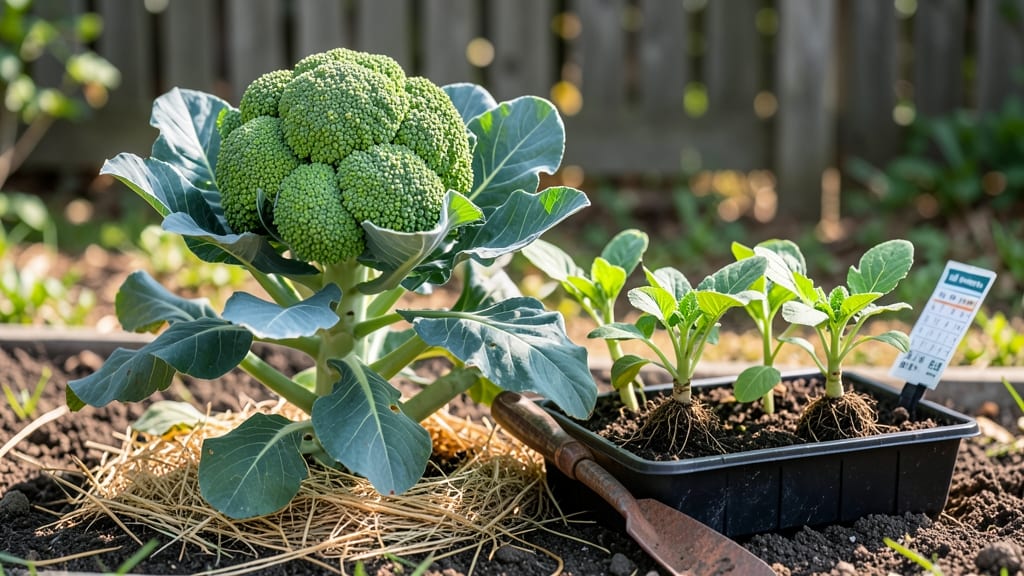
Timing your broccoli 🥦 planting in North Carolina’s fall climate makes all the difference between a bountiful harvest and wasted effort. If you plant too early, your broccoli might bolt before forming heads, while planting too late risks frost damage before maturity.
The key is understanding your local frost dates and choosing the right window for either transplants or seeds.
For most of North Carolina’s 7a-8b zones, the ideal window for transplants runs from late August through early September, while seeds can go in slightly later—September to early October.
This timing ensures your broccoli has 60-80 days to mature before the first frost hits in mid-November, giving you a harvest from November through January.
But here’s the thing: not all broccoli varieties play by the same rules. Fast-maturing types like ‘Calabrese’ can handle a later start, while slower growers like ‘Waltham 29’ need that early edge.
I’ll break down exactly how to adjust your planting schedule based on your region and the variety you’re growing.
Ready to grow broccoli that thrives? Let’s dive into the exact steps—from soil prep to frost-proofing your plants—to guarantee the best possible fall harvest in your North Carolina garden.
Exact fall planting dates for broccoli in North Carolina by region
North Carolina’s diverse climate means your broccoli planting dates should vary by region. The Coastal Plain, Piedmont, and Mountain regions all have slightly different first frost dates, so timing is key. Aim to plant 4-6 weeks before frost for a successful harvest. Here’s your region-specific schedule:
For Coastal NC (Zones 8a-8b), your first frost typically arrives around November 15-30. This means you should plant transplants in late August to early September or direct-sow seeds in early to mid-September. The warmer coastal air gives you a longer growing window than inland areas.
In the Piedmont region (Zones 7a-7b), frost usually hits by November 1-15. Plant transplants between August 20 and September 10 or seeds from mid-September to early October. This region offers a balance—cool enough to prevent bolting but not so cold that growth stalls.
For Mountain NC (Zones 6a-7a), where frost can arrive as early as October 20, focus on transplants from August 15 to September 5 and seeds from late September to early October. The shorter season demands faster-maturing varieties like 'De Cicco' or 'Waltham 29'.
| Region | First Frost | Transplant Window | Direct Sow Window | Harvest Window |
|---|---|---|---|---|
| Coastal Plain (8a-8b) | Nov 15-30 | Late Aug - Early Sep | Early - Mid Sep | Nov - Jan |
| Piedmont (7a-7b) | Nov 1-15 | Aug 20 - Sep 10 | Mid Sep - Early Oct | Oct - Dec |
| Mountain (6a-7a) | Oct 20 - Nov 5 | Aug 15 - Sep 5 | Late Sep - Early Oct | Sep - Nov |
If you’re unsure about your exact frost date, check the NC State Extension’s frost map or use a 10-day forecast as a guide.
For example, if your area typically sees frost by November 10, plant transplants by September 20 to ensure a 60-day harvest window before cold sets in.
For direct-sown seeds, start them indoors 4-6 weeks before transplanting to give seedlings a head start. Harden them off for 7-10 days before moving to the garden. This method works well for late-September plantings in cooler regions.
Pro tip: Use row covers or cold frames to extend your harvest into December or January in milder zones. These tools can push your last frost date back by 2-4 weeks, giving you extra time to enjoy homegrown broccoli.
Remember, soil temperature matters too. Broccoli seeds need soil at 40°F or warmer to germinate. If your soil is cooler, wait until temperatures rise or use a seedling heat mat for faster sprouting.
Finally, consider your microclimate. A sunny, sheltered spot may stay warmer than the general forecast, allowing for a slightly later planting. Observe your garden’s behavior over the years to fine-tune your schedule.
With these region-specific dates, you’ll avoid the two biggest fall broccoli mistakes: planting too early (risking bolting) or too late (losing plants to frost). Happy planting!
How to adjust planting time for early vs. late varieties of broccoli
Choosing the right broccoli variety for NC fall gardens means balancing maturity time with frost dates. Early varieties like 'Calabrese' mature in 50-60 days, while late varieties such as 'Waltham 29' take 70-80 days.
Your timing depends on when you want to harvest—early varieties for late fall, late varieties for winter.
For Coastal NC, where first frost hits mid-November, plant fast-maturing varieties in late August for harvests by Thanksgiving. In the Piedmont, with frost around early November, late varieties can be sown in early September for January harvests.
In Mountain regions, where frost arrives by late October, focus on transplants of early varieties in August. Slow growers won’t survive the season. Always check your USDA Zone 7a-8b frost dates—NC’s 180-220 frost-free days give you flexibility, but push it too far, and you’ll lose your crop.
Early Varieties (50-60 Days)
✅ Pros:
- Harvest by late fall
- Avoid bolting risk from cold
- Faster seed-to-harvest cycle
❌ Cons:
- Smaller head sizes
- Less winter storage potential
- Limited succession planting options
Late Varieties (70-80 Days)
✅ Pros:
- Larger harvest yields
- Extends harvest window into winter
- Better storage life for preserved crops
❌ Cons:
- Risk of frost damage if planted late
- Requires earlier sowing (July-August)
- Needs row covers for winter protection
For succession planting, stagger seed sowing every 2 weeks in September. This ensures a continuous harvest from November through January. Use row covers or cold frames to protect late varieties from light frosts (28°F or above).
Pro tip: Mix early and late varieties in the same bed. Harvest the early ones first, then let the late ones mature. This maximizes space and extends your harvest without overcrowding. Just be sure to space plants 18-24 inches apart—broccoli needs room to grow those 2-3 foot stalks!
If you’re growing for winter storage, prioritize late varieties like 'De Cicco', which tolerate light frosts and store well. For fresh eating, early varieties like 'Green Goliath' deliver sweet, tender heads before the holidays.
Plan your mix based on your family’s needs—and don’t forget to harvest side shoots after cutting the main head!