
Plants
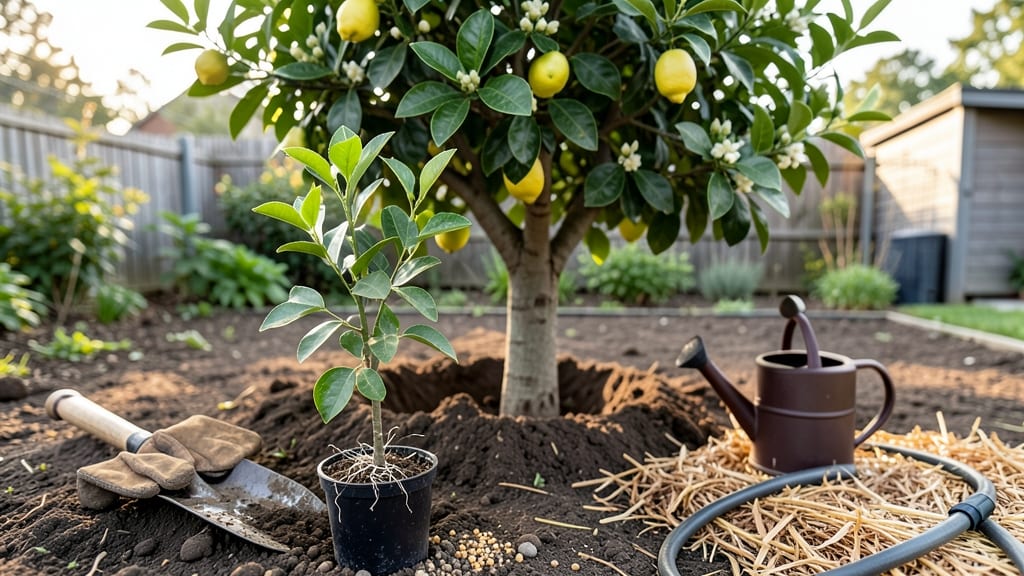
Timing when to plant a lemon tree in the ground perfectly can mean the difference between a thriving 🍋 lemon tree and a frost-killed sapling—so when exactly should you dig in?
Most gardeners in USDA Zone 6 and beyond wait until spring after the last frost date, but that’s not the whole story. Soil temperature matters just as much as calendar dates—your lemon tree’s roots need warmth to thrive, ideally between 60-80°F.
Planting too early in cool soil can stunt growth or even kill your young tree.
In warmer regions like Southern California or Florida, you’ve got more flexibility—fall planting works too, as long as you get it in before the first frost. But in cooler climates, like Zone 6a-8a, timing is everything.
We’ll break down the exact windows for your region, plus how to adjust if you’re growing in containers.
Ready to get your lemon tree off to the right start? Let’s dive into the science of soil temps, frost-free calendars, and the 3 biggest mistakes that sabotage new plantings every year.
Optimal soil temperature ranges for planting lemon trees
Lemon trees are tropical at heart, and they hate cold roots. Planting them in soil that’s too cool slows growth, stresses the tree, and even invites root rot.
The ideal soil temperature range for planting is between 60°F and 80°F, with 65°F being the sweet spot for root establishment.
Why does temperature matter so much? Lemon trees originate from subtropical climates where roots thrive in warm, well-draining soil. Cold soil below 55°F shocks the roots, while temperatures above 85°F can dry out the soil too quickly, making it harder for roots to absorb moisture.
Here’s how to test your soil’s readiness: Use a soil thermometer (available at garden centers for ~$10) and check the temperature 2-3 inches deep, where the roots will initially grow.
If it’s below 60°F, wait a few more weeks—your lemon tree will thank you with faster growth and fewer pests.
| Soil Temp Range | Root Activity | Planting Recommendation |
|---|---|---|
| Below 55°F | Dormant or stressed | ❌ Avoid planting—wait for warmer soil |
| 55°F–59°F | Slow root growth | ⚠️ Risky—plant only if no frost forecast |
| 60°F–65°F | Moderate growth | ✅ Best time to plant (spring/summer) |
| 66°F–80°F | Optimal growth | ✅ Ideal for root establishment |
| Above 85°F | Rapid moisture loss | ⚠️ Plant early morning/late afternoon |
In cooler climates (Zones 6-8), aim for late spring planting (after May 15) when soil temperatures consistently stay above 60°F. For warmer zones (Zones 9-11), you can plant as early as February, but avoid peak summer heat if possible—new roots struggle in extreme dryness.
Pro tip: If your soil is still too cold, mulch heavily around the planting area with straw or wood chips to warm it faster. This mimics the natural leaf litter in tropical forests where lemon trees thrive. Just avoid piling mulch directly against the trunk to prevent rot.
Another trick? Plant in raised beds or black plastic mulch to raise soil temperatures by 5-10°F. I’ve seen gardeners in Zone 7 plant lemon trees in June using this method—just monitor soil temps closely with your thermometer.
Remember, root health = tree health. A lemon tree planted in cold soil may survive, but it’ll grow slowly, produce fewer fruits, and be more susceptible to diseases like root rot.
Take the time to get the soil temperature right, and you’ll set your tree up for years of juicy, homegrown lemons.
🌱
Frost-free planting calendar by US growing Zones (3-11)
Planting your lemon tree at the wrong time can spell disaster—especially in colder zones where frost damage stunts growth or kills young roots. The key is planting after the last frost when soil temperatures consistently stay above 60°F.
But timing varies wildly from Zone 3 to Zone 11, so let’s break it down by region.
In cooler climates (Zones 3-8), aim for late spring (May-June) after all frost risk has passed. Southern growers in Zones 9-11 can plant year-round, but fall (September-October) gives roots time to establish before summer heat arrives.
Container growers in frost-prone areas can cheat the system by planting 6-8 weeks earlier and moving pots indoors during winter.
🌱
| Zone | Last Frost Date | Ideal Planting Window | Soil Temp Threshold | Notes |
|---|---|---|---|---|
| Zones 3-5 | Mid-May to June 15 | Late May–June 15 | 60–65°F | Use container growing; move indoors in winter. |
| Zones 6-7 | April 15–May 15 | May–June 10 | 60–70°F | Plant after last frost; protect with mulch. |
| Zones 8-9 | March 1–April 15 | March–April or Sept–Oct | 65–75°F | Fall planting avoids summer heat stress. |
| Zones 10-11 | None (tropical) | Year-round (best in fall or spring) | 70–80°F | Avoid peak summer (high humidity + pests). |
For Zone 6 (like much of the Midwest), I’ve planted my lemon tree in late May after testing soil warmth with a soil thermometer. In Zone 9 (Southern California), I’ve seen neighbors plant as early as February—but only in microclimates with afternoon shade to prevent heat shock.
If you’re unsure about your last frost date, check the USDA Plant Hardiness Zone Map or ask your local cooperative extension service.
Pro tip: In Zones 3-7, plant dwarf varieties like ‘Meyer lemon’ for easier winter protection. These stay small enough to wrap in burlap or move under eaves when temperatures dip below 30°F. In Zones 8-11, prioritize well-draining soil to prevent root rot from summer downpours.
✂️