
Plants
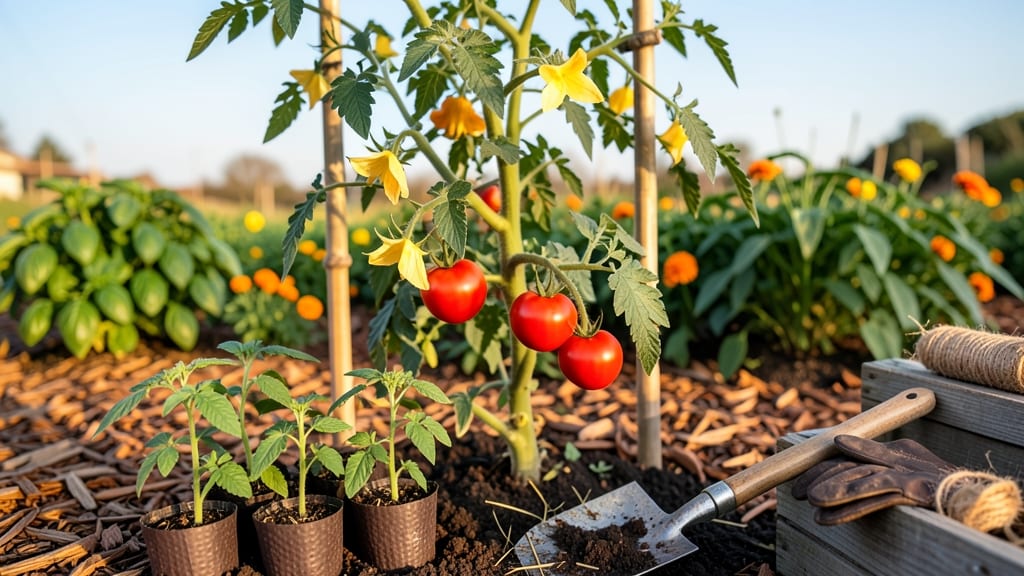
Planting tomatoes in Illinois at the wrong time can mean the difference between a bountiful harvest and a sad pile of frost-nipped seedlings.
The perfect window—after your last frost date—opens around mid-April in southern Illinois and early May in the northern zones like Chicago, where Zone 5a’s chill lingers longer.
You might be tempted to rush out and start planting as soon as the weather warms up, but soil temperature matters just as much as air temperature.
Tomatoes need warm soil—at least 60°F—to thrive, which often means waiting until late April or early May, even if the frost has passed. That’s why knowing your exact zone (5a-6b) is the key to timing it right.
Whether you’re starting seeds indoors or transplanting seedlings, this guide breaks down the ideal planting dates for your region, plus pro tips to extend your growing season. We’ll cover everything from soil prep to choosing the right varieties for Illinois’ short but sweet summer.
Skip the guesswork and learn how to align your planting schedule with nature’s calendar for juicier, healthier tomatoes all season long. Let’s get those seeds in the ground at the perfect moment!
Illinois tomato planting dates by hardiness Zone (5 vs 6)
In Illinois, tomato planting success hinges on understanding your USDA hardiness zone—whether you're in Zone 5 (northern Illinois) or Zone 6 (southern Illinois). The last frost date varies dramatically between these zones, often by 2-3 weeks, so knowing your exact planting window is critical.
For Zone 5, the average last frost date falls around April 20-30, while Zone 6 gardeners typically see frost-free conditions by April 10-20.
Tomatoes are warm-season crops that thrive when soil temperatures reach at least 60°F (15°C).
In Illinois, this usually aligns with mid-to-late May for most regions, but soil thermometers are your best friend for precision. Direct sowing seeds too early risks seed rot or stunted growth, while transplanting seedlings before the soil warms can lead to poor root establishment.
Always wait until nighttime temperatures consistently stay above 50°F (10°C).
⚠️ CRITICAL TIP: Illinois' first frost dates also vary—northern areas (Zone 5) may see frost as early as October 10, while southern areas (Zone 6) often hold off until October 25-30. This means your harvest window is shorter in colder zones, so choosing fast-maturing varieties becomes even more important. Plan to harvest tomatoes before the first frost or use season-extending techniques to protect your plants.
| Zone | Last Frost Date | Ideal Transplant Window | Direct Sow Window | First Frost Date | Soil Temp Requirement |
|---|---|---|---|---|---|
| Zone 5 (Northern IL) | April 20-30 | May 15-31 | May 1-15 (with row covers) | October 10-20 | ≥60°F (15°C) |
| Zone 6 (Southern IL) | April 10-20 | April 25-May 15 | April 15-30 (with row covers) | October 25-30 | ≥60°F (15°C) |
*Dates are averages—check local weather forecasts for real-time updates.
If you're starting tomato seeds indoors, Illinois gardeners typically begin 6-8 weeks before the last frost date. For Zone 5, this means sowing seeds indoors around March 1-15, while Zone 6 gardeners can start slightly later, around March 15-30.
Use grow lights or a sunny windowsill to provide 14-16 hours of light daily until seedlings are ready to transplant. Harden off seedlings by gradually exposing them to outdoor conditions for 7-10 days before transplanting.
For direct sowing (planting seeds directly in the garden), Illinois' shorter growing season makes this option riskier, but it’s possible with row covers or black plastic mulch to warm the soil faster. Early varieties like 'Stupice' or 'Mountain Merit' can handle cooler soils and may tolerate direct sowing as early as mid-April in Zone 6 or late April in Zone 5.
Always use biodegradable seed starter pellets or plant seeds 1/4 inch deep in loose, well-draining soil.
Regional variations within Illinois also matter. For example, Chicago (Zone 5b) has a later last frost date (May 10-20) compared to Peoria (Zone 5a) (May 1-10), while St. Louis (Zone 6a) often sees frost-free conditions by April 25.
Use the Almanac’s Frost/Freeze Calculator or your local Cooperative Extension Service for hyper-localized advice. Even within a single county, microclimates near lakes or rivers can shift frost dates by 1-2 weeks.
One common mistake Illinois gardeners make is planting tomatoes too late to account for slow growth in cooler soils. Tomatoes need 70-90 days to mature, so if you plant in mid-June, you’ll likely miss the harvest window entirely.
Aim to have ripe tomatoes on the vine by mid-September at the latest, especially in Zone 5. If you’re eager to extend your season, consider succession planting—sow a second batch of seeds 4-6 weeks after your first planting to stagger your harvest.
Finally, don’t overlook soil preparation. Tomatoes thrive in well-draining, slightly acidic soil (pH 6.0-6.8) with plenty of organic matter. Before planting, amend your soil with compost or aged manure and consider adding a balanced fertilizer (10-10-10) to
Illinois tomato planting dates by hardiness Zone (5 vs 6)
Understanding Illinois' frost dates is key to successful tomato growing. The state spans USDA Zones 5 and 6, with northern areas like Chicago typically Zone 5b and southern regions like St. Louis Zone 6a.
These zones dictate when you can safely transplant seedlings or direct sow seeds without risking frost damage.
For Zone 5, the average last frost date falls around May 15, while Zone 6 gardeners can plant as early as April 20. However, these are averages—always check your local Almanac's frost predictions or use a soil thermometer to confirm soil temps reach 60°F (15°C) before planting.
| Zone | Last Frost Date | Transplant Window | Direct Sow Window | Soil Temp Requirement |
|---|---|---|---|---|
| Zone 5 (North IL) | May 15 | May 20–June 1 | June 1–15 | 60°F (15°C) |
| Zone 6 (South IL) | April 20 | April 25–May 15 | May 1–30 | 60°F (15°C) |
If you're starting seeds indoors, begin 6–8 weeks before your target transplant date. For Zone 5, that means sowing seeds by March 15, while Zone 6 gardeners can start as early as February 20. Use grow lights or a sunny windowsill to ensure strong seedlings.
For direct sowing, wait until after May 15 in Zone 5 and after April 20 in Zone 6. Direct-sown tomatoes take longer to mature, so prioritize early-maturing varieties like 'Early Girl' or 'Stupice' if you're planting late. These varieties can produce fruit in as few as 55–60 days.
Pro tip: Use black plastic mulch to warm soil faster and row covers for early planting. These tricks can push your transplant window 1–2 weeks earlier without risking frost damage. Just remove covers once flowers appear to prevent heat stress.
Remember, tomatoes are heat lovers—they thrive in 70–85°F (21–29°C) soil temps. If nights stay cool (below 50°F/10°C), use frost cloth to protect young plants until they establish roots.