
Plants
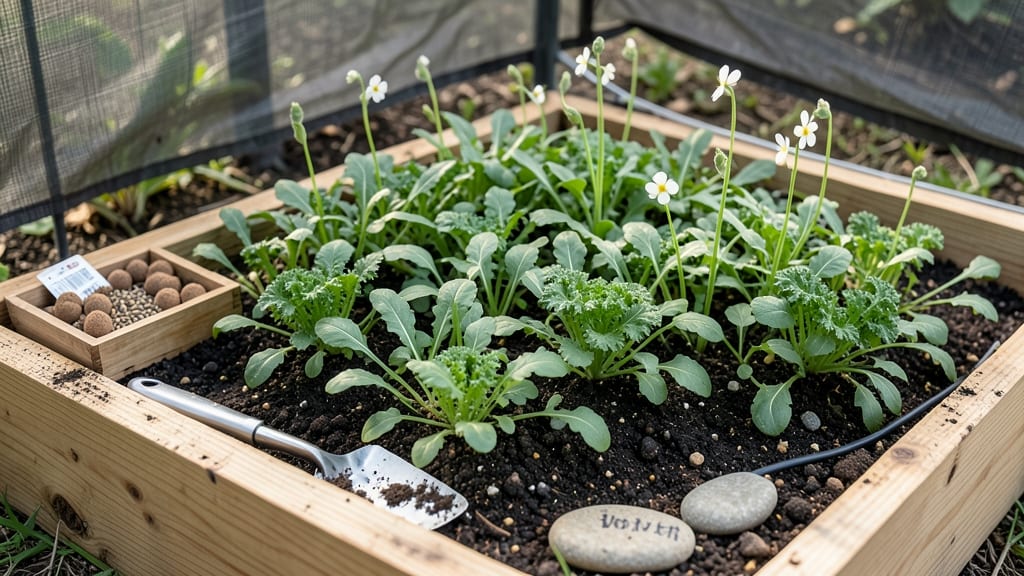
Timing your 🥬 arugula planting in Texas isn’t just about throwing seeds in the dirt—it’s the difference between crisp, peppery harvests and bitter, bolted disappointment. With Texas’ extreme heat and unpredictable frost dates, getting the schedule wrong means either wilting greens or premature flowering.
But here’s the good news: with the right approach, you can enjoy fresh arugula from fall through spring, even in our varied climate zones.
Most Texas gardeners focus on fall planting, but the ideal window actually starts as early as September in North Texas and stretches through November in South Texas. The key?
Planting 4-6 weeks before your first frost—whether that’s mid-December in the Panhandle or mid-December in Houston—gives your greens time to mature before winter slows them down. Spring plantings work too, but they require careful timing to avoid the brutal summer heat.
What sets Texas apart is how regional microclimates change the rules. In Zone 8a (like Dallas), you might squeeze in a second spring crop by late February, while in Zone 11 (like Brownsville), summer planting is a gamble.
I’ll break down exactly when to sow in your specific area, plus pro tips to keep your arugula from bolting or wilting—so you can enjoy that perfect peppery crunch all season long.
The secret to success isn’t just about when you plant—it’s about understanding your local frost dates, soil prep, and even shade strategies. Let’s dive into the exact schedule that’ll have your garden producing crisp, flavorful arugula from fall through spring, no matter where in Texas you’re growing.
Texas arugula planting calendar: best months by region (North vs. south)
Arugula thrives in Texas' cooler months, but timing varies dramatically between North Texas (like Dallas) and South Texas (like Houston).
The key is planting 4-6 weeks before your first frost—but Texas' diverse climate means your "first frost" date could be December 15 in Dallas or November 1 in El Paso. Let's break down the perfect planting windows for each region to avoid bolting (premature flowering) or heat stress.
Texas A&M AgriLife Extension confirms that fall planting yields the sweetest harvests, while spring planting risks bolting as temperatures climb. In North Texas, your best bet is September through November, while South Texas gardeners can stretch planting into early December thanks to milder winters.
Here's how to tailor your schedule to your exact location.
🌱
| Region | First Frost Date | Ideal Planting Window | Heat Tolerance Threshold | Spring Planting Window |
|---|---|---|---|---|
| North Texas (Dallas/Fort Worth) | December 15 | September 15 - November 1 | 85°F max (bolts above 80°F) | February 15 - March 15 |
| Central Texas (Austin/San Antonio) | December 1 | September 1 - November 15 | 88°F max (bolts above 82°F) | February 1 - March 10 |
| South Texas (Houston/Galveston) | December 15 | August 15 - December 1 | 90°F max (bolts above 85°F) | February 10 - March 5 |
| West Texas (El Paso/Midland) | November 1 | August 1 - October 15 | 80°F max (bolts above 75°F) | March 1 - April 1 |
Note: South Texas can push fall planting later due to milder winters, while West Texas must start earlier to avoid early frosts.
If you're in North Texas, aim to have arugula planted by October 15 for a winter harvest. The heat tolerance threshold of 85°F means any planting after November 1 risks bolting before your first frost.
In contrast, South Texas gardeners can enjoy two harvests per year—one in fall and another in early spring—thanks to their longer growing season.
For spring planting, the window is tight: February to mid-March in most regions. After that, Texas' 90°F+ afternoons will turn your arugula bitter and bolted within weeks. Pro tip: Use shade cloth (30-50%) to extend spring harvests by 2-3 weeks in hotter zones like Houston.
🌡️
Don't overlook microclimates—your yard might be 5-10°F warmer than official frost dates suggest. Observe your garden's behavior for 3 years to refine your planting schedule. For example, Austin's urban areas often stay 5°F warmer than rural Hill Country, delaying frost by 1-2 weeks. Adjust your timeline accordingly.
For container gardening, start seeds indoors 4-6 weeks before your outdoor planting window. Use grow lights to simulate 12-14 hours of light daily, which prevents bolting. Move seedlings outdoors only after hardening off for 7-10 days when nighttime temps stay above 50°F.
🪴
Remember: Arugula is a cool-season crop, meaning it grows best when daytime temps are below 75°F and nighttime temps stay above 40°F. If you live in Zone 10 (South Texas), you can grow arug
Texas arugula planting calendar: best months by region (North vs. south)
Arugula thrives in Texas’ cooler seasons, but planting times vary drastically between North and South Texas. The key? Avoid 90°F+ temperatures and time sowing for 4-6 weeks before frost. Here’s the breakdown by region using Texas A&M AgriLife data.
In North Texas (Dallas/Fort Worth), start seeds September 15–October 15 for fall harvests. Central Texas (Austin/San Antonio) can begin August 20–October 1, while South Texas (Houston/Beaumont) must plant by August 1–15 to avoid summer heat. West Texas (El Paso/Midland) waits until September 1–October 1.
| Region | Fall Planting Window | Spring Planting Window | First Frost Date | Heat Threshold |
|---|---|---|---|---|
| North Texas | September 15–October 15 | February 15–March 1 | December 15 | 85°F (3 days max) |
| Central Texas | August 20–October 1 | February 1–March 15 | December 1 | 88°F (2 days max) |
| South Texas | August 1–15 | January 15–February 15 | December 15 | 82°F (1 day max) |
| West Texas | September 1–October 1 | March 1–15 | November 1 | 90°F (never) |
For spring plantings, wait until February–March in North/Central Texas or January–February in South Texas. Succession plant every 2 weeks for continuous harvests—just stop if temps rise above 75°F for more than 3 days.
Pro tip: Use shade cloth (30–50%) in late spring to extend harvests into April–May in cooler microclimates like the Hill Country. Heat-tolerant varieties like ‘Astro’ or ‘Salad Bowl’ can handle 90°F+ for short periods, but yields suffer.
Always test soil pH (6.0–7.0) and amend with compost before planting. Clay-heavy soils in East Texas need sand or peat moss to prevent waterlogging, which triggers bolting.
Remember: Texas’ unpredictable weather means checking local frost dates yearly. Bookmark the Texas A&M AgriLife Extension frost calculator for real-time updates.