
Plants
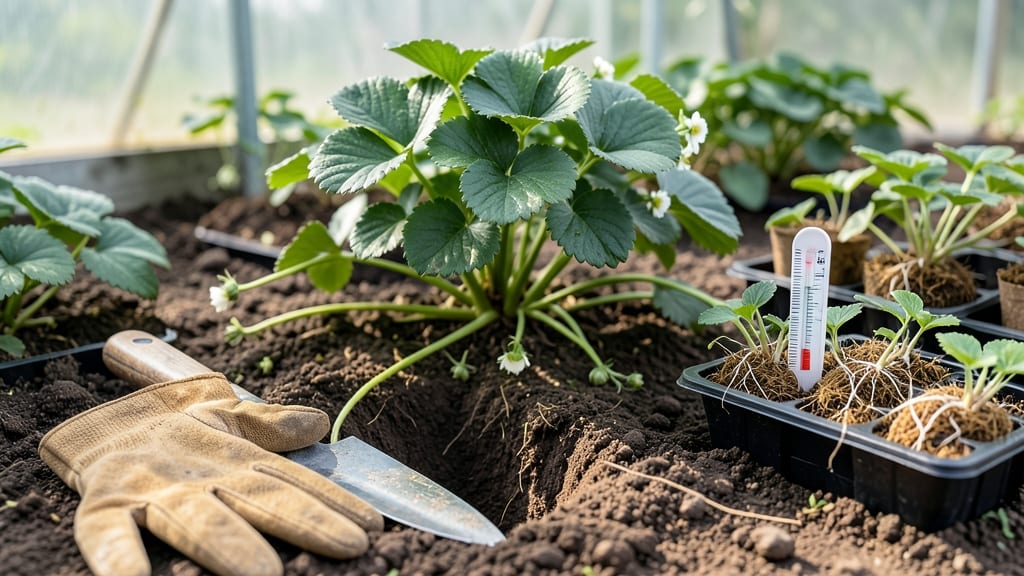
If you’ve ever planted strawberries 🍓 in New York only to watch frost nip your tender young plants, you’re not alone. The perfect timing for planting—whether in early spring or late summer—can make the difference between a thriving garden and a disappointing loss.
New York’s climate varies wildly from the chilly Hudson Valley to the milder coastal areas, and getting the timing right is critical for success.
Whether you’re growing June-bearing or everbearing varieties, knowing when to plant ensures your strawberries survive frost, thrive in the soil, and reward you with sweet harvests from June to July.
In this guide, I’ll break down the ideal planting windows for your specific microclimate—whether you’re in Upstate’s Zone 5b or Long Island’s Zone 7a. You’ll also learn how to adjust for late frosts, soil prep tricks, and whether bare-root or potted plants give you the edge.
Ready to turn your garden into a strawberry paradise? Let’s get those plants in the ground at the perfect moment—before frost steals your harvest.
Optimal strawberry planting dates by New York microclimate zones
New York’s diverse USDA zones (5b-7a) mean your strawberry planting window can shift by weeks—even within the same county. For Upstate NY (Zones 4-5), like Albany or Syracuse, aim for late April to early May after the last frost.
In NYC Metro (Zones 6-7), you’ll have a longer window: mid-April to early June, while Long Island (Zone 7-8) gardeners can start as early as late March.
Soil temperature is your true planting trigger: strawberries thrive when soil reaches 40°F+. Use a soil thermometer to confirm—cold soil delays root growth. In Zone 5b, this often aligns with April 15-30, while Zone 7a may hit 40°F by mid-March.
Pro tip: Ever-bearing varieties (like 'Seascape') tolerate cooler soils better than June-bearing types.
Fall planting is a secret weapon for extended harvests. In Upstate NY, plant bare-root strawberries in late August (6-8 weeks before first frost). For NYC and Long Island, push it to mid-September—these plants establish roots before winter and fruit earlier next spring. June-bearing varieties (like 'Jewel') excel with this method.
Here’s how microclimates reshape your schedule: A west-facing slope in the Catskills warms faster than a valley garden, so plant 1-2 weeks earlier there. Conversely, coastal Long Island’s moderating ocean breezes delay frost—plant 2 weeks ahead of inland areas.
Always check local frost data (like Cornell’s Garden Network) for your exact zip code.
🌱Key takeaway: Upstate = late April, NYC = mid-April to June, Long Island = late March. Fall planting works for all zones but requires 6-8 weeks before frost. Now, let’s dive into the exact planting windows tailored to your region.
| Region | USDA Zone | Spring Planting Window | Fall Planting Window | Soil Temp Threshold | Best Varieties |
|---|---|---|---|---|---|
| Upstate NY (Albany, Syracuse) | 4b-5b | Late April–Early May | Late August | 40°F+ | 'Jewel', 'Chandler' |
| NYC Metro (Bronx, Brooklyn) | 6a-7a | Mid-April–Early June | Mid-September | 40°F+ | 'Seascape', 'Albion' |
| Long Island (Huntington, Montauk) | 7a-8a | Late March–Early May | Early September | 45°F+ | 'Fort Laramie', 'Ozark Beauty' |
For container gardening, adjust dates 1-2 weeks earlier—pots warm faster. Fill containers with well-draining mix (50% potting soil, 50% compost) to prevent root rot. June-bearing varieties planted in spring yield 60-70% of their fruit in June, while ever-bearing types produce two smaller harvests (spring and fall).
Choose based on your harvest goals!
🌿Pro move: Stagger planting by 2-3 weeks. Plant half your strawberries in early spring (for June harvest) and the rest in late spring (for July-August fruit).
This extends your season and reduces pest pressure. Pair this with succession planting of radishes or lettuce in the same bed—strawberries’ shallow roots won’t compete for nutrients.
💡NY-specific tip: Use black plastic mulch in Upstate zones to warm soil 5-10°
How to adjust planting timing for zero-frost success in New York
New York’s spring frosts can devastate strawberry plants if you’re not prepared. The key to zero-frost success lies in choosing the right varieties and using protective strategies tailored to your microclimate.
For example, June-bearing varieties like 'Jewel' thrive when planted in early spring (March-April), while everbearing types such as 'Seascape' can handle slightly later plantings in late summer (August).
Timing isn’t just about the calendar—it’s also about soil temperature. Strawberries need soil that’s at least 40°F (4°C) before planting. In Upstate New York (Zones 4-5), wait until late April when soil warms up, while Long Island (Zone 7-8) gardeners can plant as early as mid-March.
- June-bearing: 'Jewel', 'Chandler' (best for early spring)
- Everbearing: 'Seascape', 'Ostara' (flexible timing)
- Day-neutral: 'Tristar' (handles late plantings well)
Choose varieties based on your last frost date and desired harvest window.
To extend your growing season, use row covers or low tunnels for early plantings. These create a 5-10°F warmer microclimate, shielding plants from late frosts. For bare-root strawberries, plant them in late winter (February) but cover them with straw mulch until soil warms.
Potted strawberries, on the other hand, can go in the ground 2-3 weeks earlier since their roots warm faster.
Another trick is to use black plastic mulch in early spring to raise soil temperatures by 5-8°F. Lay it down 2 weeks before planting and create small slits for the plants.
This method is especially useful in Upstate regions where cold snaps linger longer. Pair it with a straw mulch layer afterward to retain moisture and suppress weeds.
For late summer plantings, aim for mid-August in most of New York. This gives plants time to establish roots before winter, ensuring a second harvest the following spring.
Use everbearing varieties like 'Seascape' for this strategy—they produce fruit in late summer and fall, then again the next year.
Finally, monitor your local frost forecasts using tools like the National Weather Service or Old Farmer’s Almanac. If a frost is predicted within 48 hours of planting, delay until conditions improve.
With these adjustments, you’ll minimize frost risk and maximize your strawberry yield—no matter where in New York you garden. 🌱